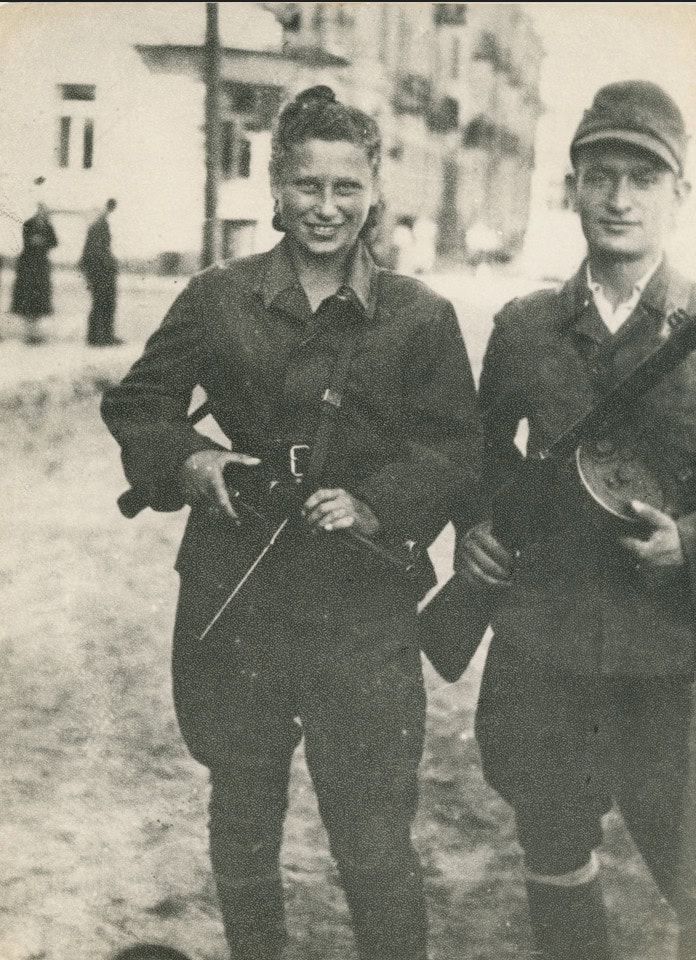
This chapter explores the multifaceted and complex experiences of Jewish women in partisan units operating in the dense forests of Lithuania and Western Belarus during World War II. It examines how women adapted to extreme, unpredictable forest environments, navigating dual survival challenges posed by Nazi aggression and internal camp dynamics shaped by gender, ethnicity, and social hierarchy. By drawing on memoirs, oral testimonies, and historiographical frameworks, the study highlights both the heroic contributions and the daily, unglamorous struggles of female partisans whose voices were long marginalized in mainstream, male-dominated Holocaust narratives.
Historiographically, early postwar publications either minimized women’s roles to brief mentions of camp status or highlighted exceptional combat heroines who performed rail sabotage and received military honors. For decades, Israeli collective memory prioritized masculine combat narratives to counter the trope of victims going passively to slaughter, leaving “ordinary” female partisans in the shadows. However, the rise of gender-focused Holocaust scholarship and the collection of survivor testimonies from the 1980s onward transformed this landscape. These ego-documents allowed non-prominent women to share nuanced, subjective memories, reflecting a spectrum of emotions ranging from liberation and empowerment to deep disappointment, anxiety, and trauma.
Applying historical frameworks of gender analysis—specifically continuity, disruption, and sequential adaptation—the chapter demonstrates how women navigated forest existence. The framework of continuity illustrates how many women adapted by translating prewar domestic skills, such as cooking, laundering, tailoring, and nurturing, into vital survival strategies. Although many women had hoped to participate in armed operations, commanders frequently assigned them to traditional domestic tasks. Figures like Pesyah Sheinbaum and Yocheved Reznik reluctantly assumed control over kitchen operations and food distribution, earning respect as motherly figures who ensured unit survival during severe shortages. Similarly, women with medical or nursing backgrounds provided critical healthcare in makeshift forest clinics.
Conversely, the disruptive framework highlights women who broke prewar gender conventions by taking up arms, executing sabotage, and gathering intelligence. Women such as Nyusa Lubotzki conducted dangerous night reconnaissance, while Yafah Burstein participated in mining railroad tracks under enemy fire. Yet, female combatants operated under relentless pressure to prove their worth, facing constant scrutiny to demonstrate physical capability equal to or exceeding that of male comrades. Even when engaging in combat, women experienced intense psychological conflict during extreme retaliatory acts, such as setting villages on fire or executing missions, exposing the emotional strain beneath their outward resilience.
The sequential framework is particularly evident in how women managed pregnancy, childbirth, and relationships. Forest life presented severe physical and logistical obstacles, including lack of sanitation, freezing temperatures, intense fear, and pervasive threats of sexual harassment from both Soviet and Jewish male comrades. To secure protection, stability, and respect, many women formed partnerships with male partisans, resulting in long-term relationships that often endured after liberation. However, pregnancy in the forest posed grave dangers, as Soviet commands and harsh conditions rendered newborns a threat to unit security. Women employed various strategies to handle pregnancy, ranging from avoiding conception to giving birth in primitive bunkers (ziemlankas), surrendering infants to local peasants, or facing agonizing instances where newborns were killed to prevent detection. Extraordinary cases, such as communist commissar Chiena Borowska, demonstrate how political ideology and authority dictated conduct, as she enforced strict discipline while secretly placing her own newborn with local farmers.
The chapter underscores that human dynamics—including antisemitism within Soviet and non-Jewish partisan units, gender discrimination, and internal power structures—often posed greater threats to female partisans than the physical environment itself. Survival required immense mental fortitude, forcing women to suppress grief over lost families and project stoic strength to avoid expulsion or execution. By incorporating the diverse voices of female liaisons, combatants, cooks, and mothers, the chapter provides a comprehensive understanding of how Jewish women exercised agency, demonstrated resilience, and navigated the harsh realities of partisan warfare in Eastern Europe.
Published in:
Ozacky-Stern, D. (2024). Heroines of the Forest: Jewish Women in Partisan Units in Lithuania and Belarus. In L. Weintrob & J. T. Baumel-Schwartz (Eds.), Heroines of the Holocaust: Reframing Resistance and Courage in Genocide. Oxford: Routledge, 190-202.