The Forest as a Synagogue: Upholding Jewish Tradition and Religion in the Partisan Units
Daniela Ozacky Stern
The forests were perceived as unknown and unpredictable places… Alien and alienating, sinister and threatening places, devoid of whimsy or appeal. Survivors recall the strange howls of the wind and animals, especially at night (Kweit 2019, 66).
In the forest they entered a new world. Even people they had known earlier assumed a different appearance in the forest camp. There, one’s speech was different, the way one walked was different, and one’s thoughts were different (Toury 1990, 66).
Introduction
This article seeks to examine a unique chapter in Jewish history, that of Jews who fled ghettos and forced labor camps during WWII, headed to nearby forests and joined Soviet partisan units. They were integrated into mixed partisan units – Jews and non-Jews – in which the latter were the majority; separate all-Jewish units; and what was called “family camps”. The forests referred to here are in Lithuania and west Belarus, mainly Rudniki, Narocz, Koziany, Nacza, and Naliboki. Jews from large and small ghettos escaped to them with the aim of surviving, fighting, and taking revenge against the Germans and their local collaborators. The obstacles were huge, and the integration of the Jews into the Soviet partisan movement was far from smooth. Daily life was harsh, and obtaining food, supplies, weapons, and ammunition required exceptional efforts. Maintaining morality, humanity and faith was particularly complicated. Further on I focus on the manner in which they perceived the forest and adapted to life in its wilderness, with special emphasis on the way in which they managed to preserve Jewish tradition, culture and holidays, and practice religion in those challenging times.
This research is based mostly on testimonies, memoires, and life stories of former Jewish partisans, who related their memories immediately after the war and in the years that followed. Some of the testimonies are written or oral, most are on filmed videos, and all are dispersed among different archives around the world. Some of those testimonies have never been studied or used in historical research, and one of my goals was to explore and bring to light the voices of the survivors, letting them be heard.[1] A specific focus of this article will be depicting and analyzing the cultural and religious aspects of the partisan’s lives and seeing the forest as a synagogue – a place of worship and one that provided a degree of comfort.
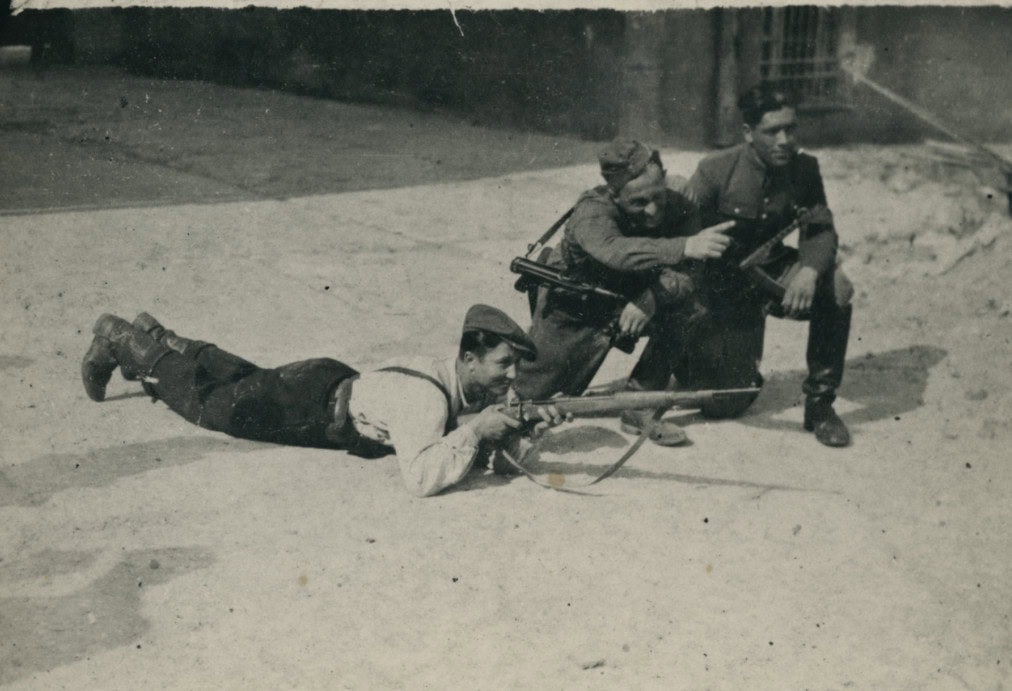
In their testimonies, former partisans recounted their daily experiences in the forests, and how important it was for them to adhere to their traditions as much as they could in the new reality. Observing Jewish holidays, engaging in group or individual prayers, longing for their old Promised land in Eretz Israel (Palestine), reaching out to divine providence in times of danger and deadly peril, were part of a unique phenomenon which differentiated them from their non-Jewish comrades. We must remember that those Jews had escaped from sites of persecution and mass murder. They had been imprisoned in ghettos, or held in forced labor camps, and some even miraculously managed to escape from death sites, like Ponary near Vilnius and the Ninth Fort near Kovno. And so, they arrived at the forests having already experienced hardships and persecutions, and after witnessing scenes of mass violence. Most of them were not military people and had no combat experience. In the forests they had to overcome enormous difficulties.
Many Jewish partisans found ways in which to interact with nature; they tried to study the forest physically and spiritually. Many regarded the forest as an alternative synagogue, a place of community gathering and proximity to God, in which survival, faith, vengeance and resistance were practiced together. Yet, they knew how to adapt to the new reality and not to be strict with themselves when circumstances so required. As anthropologist Suzanne Wiener Weber put it, “Vitiating former socio-cultural practices became necessary” (Wiener Weber 2012, 5).
The Forest as a New Space
Jews who escaped from ghettos and camps to the forests of Eastern Europe, were mostly accustomed to urban life. Upon their arrival at the forests they encountered a wholly new space. They were trying to find refuge from the mass violence impose on them by the Germans and wanted first and foremost to save their lives. Those of them who managed to do so, joined partisan groups, and were determined to fight the Germans and take revenge, while adjusting to the harsh reality of living outdoors and adapting to nature. The forest was indeed a wild, savage space, and held many challenges and risks. The constant humidity, the winter cold, snow, frost, swamps, lice, leeches, wild animals and more, were all part of the daily life facing the partisans. Interestingly, in the vast historiography that depicts the Jewish experience in the partisan units, not enough attention was hitherto focused on the spatial experience of living in the wild.[2] The following words aim to fill this void, concentrating mostly on the oral histories of former Jewish partisans who survived and told their life stories.
Following the initial period of shock and getting used to the wild conditions in the forest, with time many of the Jewish partisans also discovered the bright side of life in this new space, which offered unprecedented freedom and lent spiritual meaning to their life. From former Jewish partisans’ testimonies and memoires one comes to the realization that living in a community such as they used to in their previous life and upholding remnants of their traditions to the best of their ability – strengthened their ability to survive the hardships, overcome feelings of despair and depression, and gave them hope for the future. The forest replaced the synagogue as a space of togetherness and belonging and despite the harsh conditions, some of the former partisans regard their time in the forest with affection and nostalgia.
In her work on what she calls ‘fugitives’ in the forests during WWII, Weiner Weber claims that, “The material aspects of the forest were only part of their experience. The forest, as an objective material space, enabled the ‘possibility for creative social practices’. In addition to its material elements, the forest was also a place charged with subjective meaning and culture. It became the stage for the fugitives’ survival practices – the material, philosophical and spiritual platform for their agency” (Weiner Weber, 2008, 35-60).
I find that observation helpful when trying to analyze the ways in which Jewish partisans in the forests practiced religious laws and followed Jewish traditional customs, celebrated Jewish holidays, and upheld their faith even under the extremely strange conditions of forest life. Jewish faith and prayers were practiced not only during calm and rather quiet times, but also in times of danger and in life-threatening situations. The forest as an unfamiliar space created unique reactions among the mostly urban Jews who sought refuge under its canopy. Some feared its mysteries while others admired its beauty and found it almost mystical. The forest evoked various emotions among its inhabitants and was simultaneously a trap and a refuge for them. In the memoires and testimonies of former partisans they often speak of the forest as an entity in and of itself, with ambivalence and with awe. Shmerke Kaczerginski, a Yiddish poet and partisan, described a cruel battle between his partisan battalion and a German unit in the forest of Narocz, west Belarus, near the town of Miadziol (Myadzyel). He began his report with a romantic image of his commander as part of the forest:
“Sun. Light wind rocks the branches of the tree which stands erect by the window and its shadow falls on the suntanned round face of commander Sadikin… The blue sky is reflected in his bright eyes, his golden hair swings lightly. Sadikin stands close to the rustle of the green branches in the snowy blue space” (Kaczerginski, Yad Vashem Archive, O.33-31). When they ride back to the forest after overcoming the Germans, killing many of them and carrying a heavy load of plunder, Kaczerginski refers again to the forest as an eyewitness, an accomplice: “Who is singing? What whisper comes from the tree branches?” (Kaczerginski, Yad Vashem Archive, O.33-31).
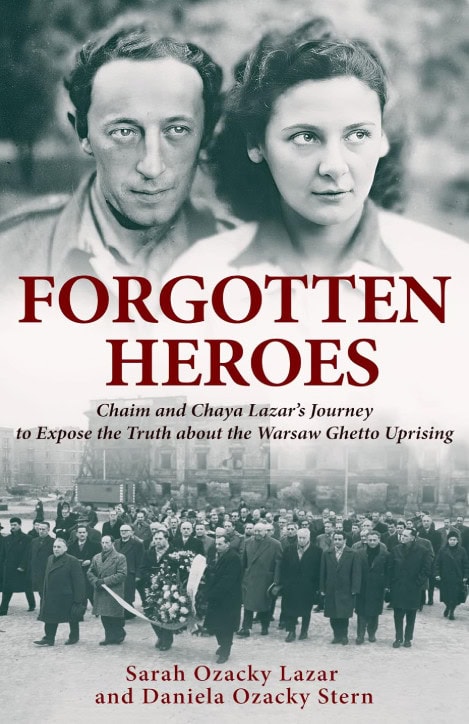
Chaya Shapira (Lazar), was a 19-year-old partisan in the Rudniki forest, who escaped from the Vilna ghetto on the day of the final liquidation, September 23, 1943. As the Ukrainian collaborators were kidnapping Jews from the ghetto streets and corralling them in convoys to be led to Rossa Square on Subocz street, she managed to flee from the convoy on Konska street (now Arkliu). After the end of the Aktion she started her escape towards the Rudniki forests with the aim of joining the partisans there. She recounted in her video testimony, 54 years after the events took place, the story of her escape from the ghetto to the forest, all by herself. She recalled:
Soon the forest begins its nightly chorus. The voices of beast and bird are intermingled with the branches of the rustling trees.
I rise and leave my hiding place. I am going to try and reach the next village, where a German garrison is stationed. To my left and right are walls of trees. The howl of the autumn night is quite deafening. But I am not frightened. I have faith that the four-legged beast of prey is more humane than its counterpart on two legs.
Suddenly I see green lights flickering among the trees. They circle around me like falling stars. I think that they are the searchlights of the police looking for me and for a moment I consider climbing a tree… Then the lights are gone… I walk along for some time, when suddenly, a pair of green lamps comes straight at me at a terrific speed. It lets out a slight bark and continues on its way. I am greatly relieved. They are wolves, who have left their lairs at nightfall to seek out their prey for food.
For some reason this does not frighten me. These beasts of prey have their own codes of morality. They sense that they are confronted with a more persecuted animal and they do not touch me. At that moment I think to myself: Do not be afraid of animals –
beware of men (Lazar, USC Shoah Foundation, 30238).
Community, Togetherness and Kinship
In the Narocz forests Jews joined the partisan brigade of Polkovnik Fiodor Markov. He was a former teacher in the town of Swieciany, who knew some of the Jews who had escaped to the forests. Additionally, he had a Jewish wife, a communist named Ettel Distink, and those facts determined his willingness to allow the establishment of an all-Jewish partisan unit. For a short while, seven weeks, they managed to maintain a separate Jewish unit called Miest (Neqama in Hebrew, Revenge in English).[3] However, on September 23, 1943 seven weeks after its formation, the unit was disbanded in a rather humiliating and anti-Semitic manner, under the pretense that the partisan units should be formed on territorial national bases, and therefore, there could not be a separate Jewish unit. The Jewish fighters from Miest were absorbed into other partisan units. A group of qualified workers, who had necessary professions, were ordered to establish a working partisan unit, Proizvodstvennia Gruppa. Markov appointed Boris Groinman as the head of the unit, whose duties were to provide the fighting partisans with services such as baking, sewing, shoemaking, tanning, etc. (Levin 1974, 10-13). “I especially remember those nights of singing together,” recounted Moshe Kalchheim. Some Jews who sang well used to sing and play instruments, such as guitars and organs. There was a Russian partisan from a nearby unit who used to join them. He brought a guitar, and knew how to sing, “and that is how we spent many hours, lasting into the nights. I remember especially the wonderful Yiddish songs that Yechiel Burgin sang and taught us. He was a member of the Yiddish puppet theater ‘Meydim’ in Vilna” (Kalchheim 1991, 80-81).[4] Jews in the forest used to sit in the evenings around a bonfire, discuss Zionist issues, and sing Eretz Israel songs. Those activities provided cheer, raised morale, and offered hope in the hard times of the forest. “They were an escape from the hardship, and to an extent a small piece of Eretz Israel in the spiritual desert in which we were,” recalled Kalchheim (Kalchheim 1991, 81; Geffen et al. 1958, 130). Singing around the bonfire was a means of leisure and comfort, but it was also used politically for Zionist action. In the “family camp” of the Bielski brothers in Naliboki forest, where not only fighters stayed, but also women, children, the elderly and non-combatants, talks about Eretz Israel and Zionist aspirations were common on such evenings: “There was no other framework,” wrote Tuvia and Zusia Bielski in their memoire. “The group was in fact Soviet and the commissar a Russian communist, so who dared to publicly advocate for Zionism? …We tried to ask him why did he tolerate the public praying of several minyans [quorum of ten men required for public prayer service] of Orthodox Jews [and not allow open Zionist activity]… and he said: in Russia churches are open for the homeland war, so let them pray for victory here too” (Bielski , 1946, 234).
Chaim Lazar, who was walking with a partisan group through the Rudniki forest, recalled in a newspaper article that he wrote a few years after the war, that they encountered a small group of partisans who were returning to their base after a successful operation, and were surprised by their singing:
We heard Hebrew singing, encouraging and cheering; its sounds were carried by the wind to the end of the world, announcing that the eternal people is strongly faithful; sounds that defied the hostile world that was trying to annihilate us, saying that our enemy’s efforts were in vain, since the People of Israel is alive and we are going to our land” (HaMashkif, April 9, 1948).
Indeed, many partisans report this manner of overcoming despair and distress, getting together and singing. Nissan Reznik, a former member of the headquarters of the FPO (United Partisan Organization) Jewish underground in the Vilna ghetto, and a partisan in the Miest unit, saved a group of Jewish women and non-combatant men, during the German raid on the Narocz forests in September 1943. Those Jews had been abandoned by Soviet commanders who escaped to a safer nearby forest, taking only Jews who were fighters. The abandoned Jews were left without arms or supplies. They had to survive in great danger, and they managed to do so against all odds. Reznik lead that group. For a whole day, with the Germans close by, they hid in a swamp with only their heads above water. When they came out, they were wet, cold, and dirty. Rita Kuperberg who was among them, remembered: “We had nothing, so we sat around a fire and sang.” All the members of that group, who had almost no chances of survival – survived. Kuperberg explained that by saying: “The very fact that we were a group gave us power. No one fled. We helped one another” (Kuperberg, Moreshet Archive, A.472).
Kinship in extreme situations such as war, genocide and other forms of violence is immensely important, sometimes critical for survival. Kinship in such times provides emotional, practical and social support and a sense of community for individuals who, in many cases, had no previous affinity. The family capmps were organized by Jews who had escaped catastrophic realities in ghettos. With time, communities of close yet complex kinship ties were created. Bonds were formed by persecuted and victimized individuals.
Religious practices
One survivor who shed light on upholding Jewish religion in the forest was Chaim Menachem Basok.[5] He escaped from the Vilna ghetto and found refuge in the Narocz and Koziany forests. He recounted in two video testimonies his experience as a religious Jew in the forest. Before the war Basok had been a member of “Hashomer Hadati” (The Religious Guard) youth movement.[6] He escaped from the ghetto as part of a group on September 10, 1943, on their way to the Narocz forests. It was a Saturday evening, Parashat[7] “Ki Tetze“. In his testimony he recalled:
I came home… My mother knew that I would come to perform the blessings of Shabbat. She prepared a soup from onion and some potatoes and baked a chala[8] like pastry. Mother lit the Shabbat candles and cried. My grandmother lit the Shabbat candles and cried. The sisters cried, the aunts cried, everyone cried… They all knew that I was about to leave them, possibly for good. I was in the first group to be leaving the ghetto that night to go to the partisans. I prayed for the welcoming of the Shabbat… I took the Teffilin and put them in my coat pocket… I took the Tehilim [the book of Psalms] and put it in my shirt pocket” (Basok in Bogen et al. 2006, 114-115).
Basok mentioned that he used his Tehilim book the whole time he was in the partisans, in times of danger, and afterwards, when he served in the Israeli army. Interestingly, in his testimony on the way from the ghetto to the forest, a road that was full of dangers and risks, Basok compared the escapees’ situation to the biblical story of the Children of Israel who crossed the desert, on their way from Egypt to the promised land, and said that history repeats itself (Basok in Bogen et al. 2006, 116).
In the partisan unit of Kazimir, the communist colonel who was sent from Moscow and parachuted into the Narocz forest, Jews were treated kindly. He welcomed them to his unit and provided them with arms, which meant the world to them.[9] On September 30, 1943, the partisans from Kazimir unit, under the command of the paratrooper Krabilis, who was a long-time Lithuanian communist, went on a combat mission to attack a police garrison at dawn. They were supposed to attack the police building with P.T.R (anti-tank weapons). It was Rosh Hashana, the Jewish New Year. Basok participated in that action. He went to it carrying his Tefillin and Tehilim. Kazimir greeted the partisans who left for battle, and the politruk of the unit added: “Comrades (‘Raviata‘), for the homeland! For Stalin!” The partisans responded: “Hurra!” (Basok in Bogen et al. 2006, 118). As the partisan group went through a meadow, they heard cows moo. “I heard the sound of a Shofar,” Basok recalled, “it was like that in the revelation of Mount Sinai. I sang softly to myself: ‘God, you wake the dead, release the imprisoned, support the fallen, you are our savior.'”[10]
He prayed to God to help him. “I imagined the voices from the synagogue and sang like I used to: On Rosh Hashana they will write and On Yom Kippur they will sign – who will live and who will die’… We are on our way to attack. Who will come next, and who next will come?” (Basok in Bogen et al. 2006, 118-119). Zipora Kuperberg recalled Yom Kippur in the Rudniki forests: “I was amazed to see groups of partisans standing around trees… and praying. Here and there was a tallit, or a siddur – things we were already far away from. We found out it was Yom Kippur. We were fasting anyway. It had been days since we had eaten. We joined the Jews in the prayer. It was so powerful and so moving that I cannot forget” (Kuperberg, Massuah Archive, 60565).
A major problem for the partisans in the forests was the question of eating pork, which is strictly forbidden in the Jewish religion. Even those who were not Orthodox and did not observe religious laws avoided it, like Nissan Reznik, who wrote many years later: “There was only one way of obtaining food – stealing it… More than once I threatened Christian farmers with my gun and took eggs, vegetables, bread, meat, milk and pigs, everything we could. I did not eat pork, but others did, and we brought it to them” (Reznik 2003, 133).
Shmuel Shapira was a religious man who lived in the Lipuvka neighborhood near Vilnius. He escaped with his young daughter Betti to the Rudnuki forests in September 1943. About ten days after his arrival at the forests he volunteered to go on a partisan mission. The paratroopers’ Russian partisan unit of Capitan Mishka, whose base was not far from the Jewish base, conducted a mission in a nearby village. Shapira entered a local farmer’s pigsty and was planning on taking a pig. However, as he was coming out of there carrying a pig he was shot and wounded by one of his fellow Soviet partisans. At the demand of his Jewish comrades he was taken back to the base and died few days later. Before his death he asked that the Kaddish be read at his grave. That incident was a warning to the Jewish partisans not to trust their comrades, some of whom were anti-Semitic. Sanka Nisanilevicz who witnessed the event, recalled: “He was our first victim in the forest, and that was the first and last attempt by us to cooperate with the Russians. We learned a lot from that case… and became more independent”
(Nisanilevicz, Moreshet Archive, A.43; Nisanilevicz, Jabotinsky Institute Archive, k7a-8/4). It also shows that in those days of hunger, at the beginning of setting up the partisan base, pigs were a legitimate part of the partisan’s food supply (Lazar 1988, 181-183).[11]
In the Bielski camp, where it was difficult to meet the needs of the religious people, they tried to supply Kosher meat and allowed the Orthodox members to cook separately in their own Zimlankas. People who requested to be released from work on Saturdays were relieved of duty (Tec 2009, 216). Chaya Lazar described a surreal scene in Rudniki forests, on the eve of Yom Kippur (the most holy Jewish Day of Atonement) when she and her friends were set to go on a military mission: “A slice of bread and a big chunk of fat pork was given to everyone who planned to fast. The trees whispered a prayer. They were silent and ate the impure food while preparing for the holy day…” On another occasion, Chaim Basok spoke about his visit to a family camp in the Koziany forest: “I noticed a strange and intriguing vision… A few bearded Jews were sitting around a shohet who held a knife and slaughtered a few sheep. A strange thing, I thought; people are fighting for their lives and standing at the edge of the abyss, and yet they are concerned about their meat being Kosher…” (Basok, Massuah Archive, 58265).
So, the two approaches lived side by side with no criticism. “The forest was a place where everything one knew about the world and their selves radically changed. That foreign landscape muddled and transformed traditional values and norms” (Weiner Weber 2008, 14).
Chaim Lazar wrote about celebrating Passover in the Rudniki forest in April 1944. The partisans marched back from an attack on a German convoy on the main road between Vilna and Grodno:
“When we arrived at the forest, we gathered around the bonfire and started singing, first in Russian, then in Yiddish[12] and later in Hebrew. The Hebrew songs so close to the heart, pulling at the heart strings. Hands were intertwined and a wild dance started around the fire. Suddenly, the oldest member of the group stood up and said: It is Passover today! We did not arrange the seder nor did we eat matza, but no Jew in the world fulfilled the holiday commandments like we did that night. We drank four glasses of blood, pure German blood” (HaMashkif, April 23, 1948). [13]
Shalom Yoran mentioned in his memoir from Narocz forests that:
“On nights when we did not go on operations we sat around the fire, sang beautiful emotional Russian songs and dreamed about liberation at the end of the war and about our future. The song that was my favorite called ‘Let us Light a Cigarette’. I liked the words and the melody… ‘When Hitler will not exist anymore and we will return home in glorious victory, I will remember my unit and you my friend, for giving me a cigarette. Let us light it” (Yoran 1998, 150-151).
Celebrating Soviet Holidays
At the partisan base in the Rudniki forests the partisans celebrated the Red Army Day, in February 1944. The Jewish partisan Sima Zack Kagnovich recalled in her testimony:
“Red Army Day would be marked the following week, and in the unit, it was decided to celebrate it with much joy and merriment. It was necessary to estimate how much dry wine each partisan might drink that day, and it turned out that we had to prepare at least 40 liters of drink. We traveled through villages in order to barter animal skins for samogon.[14] The next day we returned from our journey with our eyes half closed from fatigue and drunkenness, as the smell of the dry wine emanated from us for quite a distance. In the large zimlanka tables were set and farmer’s fabric was spread over them, branches of fir trees decorated the tablecloths with merry green bouquets. For the holiday we fried cutlets…Everyone sat around the tables, friends and guests. The commanders spoke and we drank wine from large cups, while tears flowed from our eyes, from both joy and sorrow“.[15]
Another Soviet partisan joined the party and recounted a glorious episode in the annals of the Red Army.
Besides drinking, one of the major joys of partisan life was smoking. During Zagatuvkas – partisan operations in local villages to obtain food and supplies – partisans would loot tobacco leaves and bring them back to their base. The production of cigarettes was a veritable ceremony: drying the leaves by the fire, crumbling them and rolling them in paper. A newspaper in which to roll the dry leaves was very precious in the forest. And one of the most respected gestures a partisan could do to a friend was to present him with a cigarette (Cholavsky 2001, 374).
The tradition and way of life of sitting around a fire, singing, playing instruments and drinking came from the Russian culture and was adopted by the Jews in the forests. So was the return to nature and to the land, the soil (земля). Although some Jews who had been members of youth movements before the war, were familiar with that type of activity, others were influenced by the Soviet partisans. This “bonfire” way of life replaced in a way the feeling of close community which was so desperately needed by the Jews who had lost their sense of community during the years of occupation. This group sitting together around the bonfire also replaced the family feeling of belonging and gave the Jews a sense of brotherhood and a deep connection to one another. They all shared the same fate. Additionally, those rituals of bonding and unification were extremely important before setting out to a battle or a combat operation. It provided the people with a sense of responsibility towards one another, nurtured comradeship and relieved the stress and fear. “Sitting together in the evenings around the bonfire was one of the most common means of entertainment in the forest,” Dov Levin recalled. “The atmosphere of spiritual uplifting and bringing together that prevailed there, made it easier on the people, individuals and groups, to spontaneously express their feelings through singing and talking” (Levin 1974, 213).
The Unique Case of Family Camps
Perhaps the most well-known family camps were those founded by Tuvia Bielski and his brothers and that of Shalom Zorin, both in the Naliboki forests. They doubtlessly saved many Jews who stood no chance of being accepted into the fighting partisan units. In order to join a partisan unit, one had to know how to fight and possess a weapon. Not many Jews had the chance to acquire arms and become skilled fighters. However, the Bielski group also came under certain criticism. The other partisan units accused them of not being actual fighters, and of spending most of their time and efforts on providing food and supplies to the Jewish inhabitants of the family camp, while not undertaking sufficient combat actions against the Germans (Bakshat, Moreshet Archive, A.126).[16] Additionally, the reactions of some Soviet partisans’ units to the Jewish units of Bielski and Zorin were antagonistic. In one incident, when Jews from the Bielski unit who were leading cows passed near a Soviet unit, the Soviets falsely accused the Jews of stealing the cows from them. A brawl ensued, in the course of which six Jews and four Russians lost their lives (Parvozin, Moreshet Archive, A.122).
Interestingly, complaints about the management of the groups were also voiced by the Jews themselves. Some found differences between the two large family camps. The Bielski inhabitants accused their leaders of not providing enough food and accused the wives of the commanders of being lazy and living luxuriously (Parvozin, Moreshet Archive, A.122). At night, the men would go out to the nearby villages in search of food. And during the day they would simply rest or wander between the small camps. Some family camps built their underground bunkers somewhat far from one another, so that in case of an attack, some would still stand a chance to survive (Cholavsky 2001, 370-371). Interestingly, some families decided to stick together and separate themselves from the rest. Such was the case of the Reznik family, who escaped from Ivanava to the Zavishchanskoye forests. Arie Reznik knew some of the farmers in the forest and maintained good relations with them. In order to keep the peace with the surrounding farmers the partisans sometimes needed to go far away and obtain food from remote villagers. During the winter of 1943-44 the most stressful struggle for the inhabitants of the family camps was obtaining food. Survivors spoke about the grim and even oppressive atmosphere which enveloped the camps. The cold required having warm clothes and good boots, which were not always at hand; the snow – which was blinding at times – the feeling of insecurity, and the sense that they actually had been left for dead, not only by the Germans, but also by the Russians. Several fatal encounters occurred between Jews and Soviet partisans in the forests. Such was the fate of five Jews who escaped from Ivanava to the forests and were shot dead by Soviet partisans (Cholavsky 2001, 371-373).
Ben-Zion Feinstein spoke about the daily life in the family camp near Ivanava: every morning they woke up and got dressed in whatever they had managed to bring from home. For five months they wore the same clothes and underwear. Breakfast consisted of flour and water which was cooked as a kind of soup, with a small piece of bread. Sometimes they added a little bit of onion or fat to the porridge, to give it a better taste. They ate it also for lunch and dinner. Sometimes they stole potatoes from the villagers. “Most days we used to tell each other our life stories.” They sat around the fire and one by one they approached the fire, got undressed and hung the clothes above the fire so that the lice would fall and burn (Cholavsky 2001, 372-374; Basok, Massuah Archive, 58265).[17]
It is important to note, that in addition to their physical needs, the Jews in the forests had to face mental issues, such as the horrific sights that they had witnessed in the ghettos. The life-threatening escape to the forests sometimes entailed harsh and violent experiences, including seeing relatives and friends being killed.[18] While in the forests, many Jews continued to think about their families whom they left behind, and feelings of uncertainty and guilt were common.
Before Liberation
During the last weeks of the occupation, while still in the forests, after realizing that the war was about to end, and with the Red Army approaching, Jewish partisans started reflecting on their lives and what the future might hold for them. Yitzchak Sutin, who was among the fighting partisans of the Zorin unit, recalled:
We started thinking about liberation. After the terrible suffering in the forests, for over three years, after endless fights against the occupier, we would be free. We would start living as human beings. The morale in the base rose. Each one of us started making plans for the future (Sutin, Moreshet Archive, A.123; Geffen et al. 1958, 535-536).
Dov Levin, who escaped from the Kovno ghetto to the Rudniki forests and joined the Kovno partisan units there, testified on the last night in the forest, between July 7 and 8, 1944:
“Few of the partisans closed their eyes that last night in the forest and they did not join the spontaneous joyous expressions of singing, dancing, drinking, and firing into the air. For the Jewish fighters who got carried away on that joyful night, it was also a night for self-examination and a deep crisis. They thought troublesome thoughts: where would they go and who would they find” (Baron and Levin 1962, 378).
There were some who planned to join the Red Army and continue to fight. Others thought about taking revenge against the perpetrators, including Byelorussians, who had killed their family members. Everyone had a plan. Sutin spoke about a family camp in Naliboki, in which he estimated that at least 700 Jews lived. The children sang and danced with joy, the inhabitants washed their clothes and got ready to return to the towns. However, the older women knew that they were about to face devastation and had nowhere to return to. They cried. “I tried to console them: we will go to Eretz Israel, we will live there free among Jews, you will be our mothers and we will be your children” (Sutin, Moreshet Archive, A.123). Zorin ordered the fighting partisans to continue fighting the Germans who might try to flee into the forests. He also said that as Jews they bore another responsibility – not only to fight and take revenge against the Germans, but also to safeguard the women and children who found refuge in the forest – and make sure to bring them safely back to their towns and villages. “I call for discipline, obedience and leadership. We will prove that we Jews fought like all the other partisans,” said Zorin (Sutin, Moreshet Archive, A.123). He wanted to maintain the mutual solidarity which had been developed in the forest and make sure that people would not disperse and take care only of themselves.
Conclusions
Researching the daily life of Jews in the forests and not only their part as fighters and combatants, sheds light on interesting perspectives that have not been previously examined in the historiography. What did those partisans do in between combat operations? How did they spend time in the family camps? What were their ways of coping? The Jews found a home in the forest which replaced their destroyed home in the town. They found a community among their comrades, which replaced the lost and destroyed Jewish communities. An alternative Jewish community was formed among Jewish partisans, a new kind of kinship, including an alternative synagogue amidst the trees, where some Jews were able to return to their religion and cultural rituals. “In a world turned upside-down, the fugitives negotiated existing structures and participated in a forest culture that helped enhance their odds of survival,” stated Weiner Weber (Weiner Weber 2012, 23). And yet, part of the survival strategy was to uphold familiar rituals and traditions and maintain Jewish solidarity and human dignity. Many of the young partisans were members of youth movements who had moved away from the strict commandments of the Jewish religion even before the war. For others who were more observant, it was often impossible to follow the religious customs and rules. And yet, they all found ways to practice their Judaism in a variety of ways, be it by celebrating holidays, fasting on Yom Kippur, praying or creating an imaginary synagogue in the forest in which they could dream and hope for different life in Eretz Israel.
Partisans found unexpected ways to stay connected to their past – some carried Jewish objects such as Tefillin or Tehilim books, some joined others in prayers or prayed by themselves, refrained from eating pork or observed the Sabbath. They did it in times of danger and in times of calm. Jewish holidays symbolized meaningful moments of connecting to a greater power – that of divine providence, but also that of the unity and continuity of the Jewish people. The Jewish holidays provided the opportunity to join together, connect to their roots and find some comfort. They remembered their parent’s homes, their former life in the Shtetl, and the life they had lost. But being a partisan also offered some comfort and hope.
An interesting question to ask, is whether Jews who upheld their religion and faith, coped mentally and spiritually better than those who did not. Did those who maintained the Jewish tradition and religion provide strength or reassurance to their comrades in the extreme situations that they faced? From the testimonies of former partisans, we can learn about acts of mutual aid and Jewish solidarity in the forest (Kuperberg, Moreshet Archive, A.472; Reznik 2003, 143-144).
After liberation, and over the following years, Jewish survivors looked back on their time in the forest with fondness, remembering the brotherhood and comradeship. Chaim Lazar wrote in his diary about a partisan gathering that was organized in Ramat Gan in the garden of a former partisan’s house, to commemorate the 25th anniversary of leaving the forests: “In the garden a bonfire was lit, the electric light was turned off and the trees around were supposed to provide a sort of partisan base. The sounds of harmonica and balalaika added to the atmosphere… On that evening about 50-60 people ate and drank in good spirits” (Diary of Chaim Lazar, September 7, 1969). On another occasion he told of a party that was organized by former partisans in the Ben-Shemen forest near Jerusalem, in June 1981. Former partisans and their families gathered and Tuvia Bielski was also present. “There was an improvised orchestra, speeches, steaks and high spirits. People who had not seen one other since the days in the forest met. The excitement brought some of them to tears” (Diary of Chaim Lazar, June 21, 1981).
Bibliography
Unpublished Material
Bakshat D., “Iskara Brigade in the Iwye Ghetto”, Moreshet Archive, A.126.
Basok, C. 1986, Massuah Archive, 58265.
Fintel S., April 10, 1996, USC Shoah Foundation Visual History Archive, 14091.
Kaczerginski S., “The Chapaiev Partisan Battalion in Narocz Forest”, April 17, 1944, Yad Vashem Archive, O.33-31.
Kuperberg R., Moreshet Archive, A.472.
Kuperberg Z., 1991, Massuah Archive, 60565.
Lazar C., May 28, 1997, USC Shoah Foundation Visual History Archive, 30238.
Nisanilevicz S., “The Partisans in Rudniki”, Moreshet Archive, A.43.
Nisanilevicz S., “The First Victim”, Jabotinsky Institute Archive, k7a-8/4.
Parvozin M., “In the Forests of Naliboki”, Moreshet Archive, A.122.
Sutin Y., “The Last Days in the Forests of Naliboki”, Moreshet Archive, A.123
Verbin M., 1991, Massuah Archive, 59461.
Zack Kagnovich S., Moreshet Archive, A.41.
Published Material
Arad, Y., “Jewish Family Camps in the Forests: An Original Means of Rescue”, in Michael Marrus (Ed.), The Nazi Holocaust: Historical Articles on the Destruction of the European Jews, 7, Jewish Resistance to the Holocaust, Westport, 1989, pp. 219-239.
Baron, Z. and D. Levin, The Story of an Underground: The Resistance of the Jews of Kovno (Lithuania) in the Second World War, Jerusalem: Yad Vashem, 1962.
Bender, S. “Life stories as testament and memorial: The short life of the Neqama Battalion, an independent Jewish partisan unit operating during the Second World War in the Narocz forest, Belarus”, East European Jewish Affairs, 42(1), April 2012, pp. 1-24.
Bielski, T. and Z., Forest Jews: Jewish Partisans’ stories in the forests of Bielorussia, Tel Aviv: Am Oved, 1946.
Bogen, A., Biber A., and Kolpanitzky K. (Eds.), Memories of Partisans: Anthology, Tel-Aviv: Misrad Habitachon, 2006.
Cholavsky, S., Resistance and Partisan Struggle, Jerusalem-Tel Aviv: Moreshet and Yad Vashem Publishing, 2001.
Geffen, M., C. Grossman, S. Cholavsky, Y. Segal, A. Kovner and R. Korczak (Eds.), The Book of the Jewish Partisans, Merhavia: Sifriyat Poalim, 1958.
Kalchheim M. (Ed.), With Proud Bearing 1939-1945, Tel Aviv: Organization of Partisans, 1991.
Kweit, K., “Forests and the Final Solution”, in Klei A, und Stoll K. (Hrsg.) Leerstelle(n)?, Der Deutsche Vernichtungskrieg 1941-1944 und die Vergegenẅartgungen des Geschshens nach 1989, Berlin: Neofelis Verlag, 2019, pp. 40-69.
Lazar, C., Destruction and Resistance, Tel Aviv: Museum of Fighters and Partisans and Jabotinsky Publishing, 1988.
Levin, D., They Fought Back: Lithuanian Jewry’s Armed Resistance to the Nazis 1941-45, Jerusalem: Yad Vashem, 1974.
Reznik, N., Budding from the Ashes, Jerusalem: Massuah and Yad Vashem, 2003.
Tec, N., Defiance. The Bielski Partisans, Jerusalem: Yad Vashem, 2009.
Toury, A., Surviving the Holocaust. The Kovno Ghetto Diary, Cambridge London: Harvard UP, 1990.
Weiner Weber, S., “The Forest as a Liminal Space: A Transformation of Culture and Norms during the Holocaust”, Holocaust Studies, 14(1), 2008, pp. 35-60.
Wiener Weber, S., “Shedding City Life: Survival Mechanisms of Forest Fugitives during the Holocaust”, Holocaust Studies, 18(1), 2012, pp. 1-28.
Yoran, S., The Defiant: A True Story, Tel Aviv: Moreshet, 1998.
[1] Three important video testimonies collections are: the Fortunoff Archive at Yale University, the Yad Vashem Archive’s video testimonies collection, and the USC Shoah Foundation Visual Archive, located at the University of Southern California, Los Angeles. Additional video testimonies of Holocaust survivors are dispersed among different archives.
[2] Discussions on the spatial aspects of the Holocaust can be found in Tim Cole, Holocaust Landscapes, London: Bloomsbury Publishing, 2016 and Kwiet, “Forests and the Final Solution”, 2019.
[3] On the Miest unit see Bender 2012, 1-24.
[4] Burgin was born in 1914 in Nowa Wilejka, and the family moved to Vilna where they lived in great poverty. He studied in a Jewish religious school and in the “Mefitsei Haskalah” school. He began an artistic career as an actor and singer. He performed with his puppet theater across Lithuania, focusing on political and social criticism. He was also influential within the Jewish literature club run by Chaim Garda. In the partisan unit in Narocz he was a soloist in the singing and dancing partisan group, in addition to performing combat actions. He died in Israel in 1991.
[5] Chaim Basok was born in Vilna in 1923. He was a lawyer and Deputy Mayor of the city of Tel-Aviv.
[6] “Hashomer Hadati” is an under-researched political movement, established in 1929, which was connected to the “Mizrachi” movement in Europe. This movement combined Zionist and pioneering activities with maintaining Jewish traditions and legacies. Its members studied and sang in Hebrew.
[7] A section of the Tora read on the sabbath in the synagogue.
[8] Sabbath bread.
[9] On the Kazimir’s kind treatment of the Jews see also the testimony of Verbin, Massuah Archive, 59461.
[10] A song from the prayer book.
[11] Shapira was the first Jewish victim of the Rudniki partisan base.
[12] In partisan units in which the majority were Jews, Yiddish was the major language and at times military orders were given in Yiddish.
[13] One of the Passover customs is drinking four glasses of wine during the seder – the holiday celebration.
[14] Drinking samogon, the homemade alcoholic drink of villagers, was extremely popular among the partisans. Although it was forbidden to drink it while on duty, many partisans did so anyway.
[15] Testimony of Sima Zack Kagnovich, Moreshet Archive, A.41.
[16] On Soviet partisans’ anti-Semitism in other Jewish family camps see Cholavsky 2001, 373. See also the article of Arad 1989, 219-239.
[17]The war against lice was considered by the partisans the second front after the war against the Germans. It was almost a sport to extract lice from clothing and kill them with one’s bare hands or in the fire.
[18] For example, the testimony of Fintel who escaped the Szarkowszczyzna ghetto to the nearby forests, USC Shoah Foundation Visual History Archive, 14091.