Survival, Resistance, and Memory: Sarah Rubinovich-Schiff’s Journey from Soviet Imprisonment Through the Belarusian Partisan Movement
Published in The Journal of Slavic Military Studies, 2026
This article examines the extraordinary yet overlooked narrative of Sarah Rubinovich-Schiff, a Jewish female partisan fighter during World War II, utilizing a microhistorical approach combined with gender analysis and the examination of personal ego documents such as memoirs, notebooks, and testimonies. Through this granular focus, the study bridges grand historical accounts and lived human experiences, arguing that Rubinovich-Schiff’s personal story reveals essential dimensions of Holocaust history that broader narratives often neglect, including the gender dynamics within resistance movements, the psychological burden of violence, and the political factors shaping postwar memory construction in Israel.
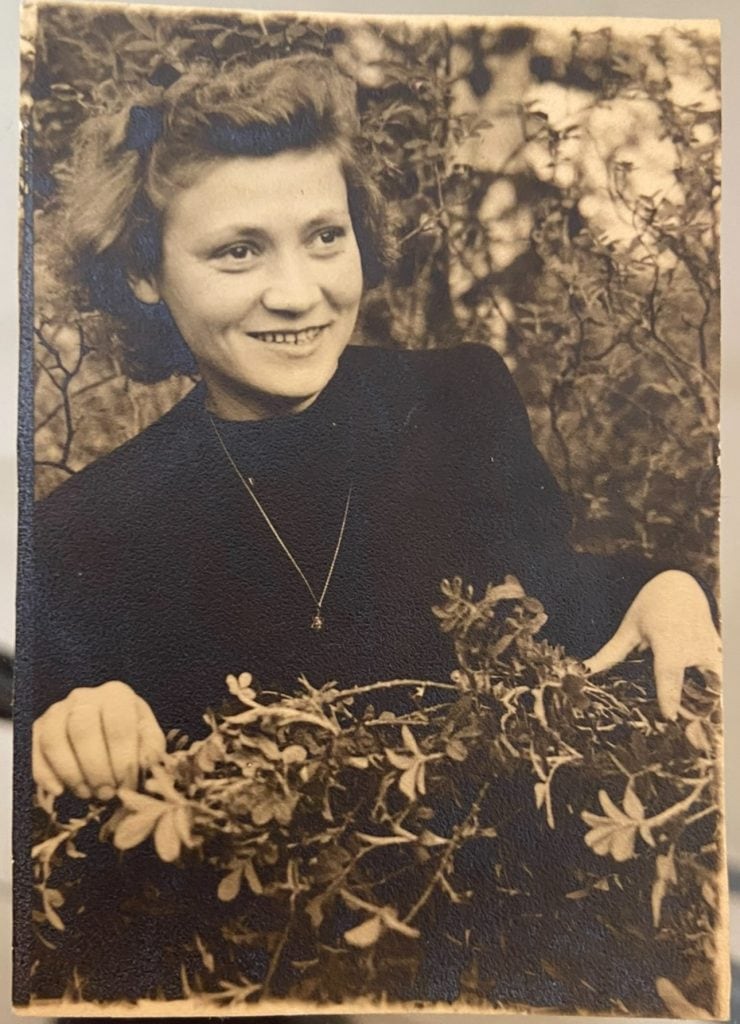
Born in Lida, Sarah was fifteen when World War II began and her hometown came under Soviet rule. As a member of the Revisionist Zionist youth movement Betar, she had received military training before the war as the sole female in her cohort. In 1940, at age seventeen, she was arrested by the NKVD for assisting Jewish refugees. Throughout her three-month imprisonment in Lida, followed by transfers to Baranovichi and Minsk prisons, she endured brutal interrogations and torture without breaking or betraying her movement comrades. Her writings offer rare, early observations on female prison dynamics, solidarity, and the institutionalized degradation of women, while also reflecting the psychological suppression of sexual vulnerability that characterized early survivor narratives. Sentenced to ten years of forced labor in Siberia, her fate shifted dramatically when the German invasion of June 1941 opened the prison gates, allowing her to escape.
Following her release, Sarah navigated the perils of the Baranovichi Ghetto, where her prewar training and courage proved essential. Operating as an underground liaison, she used her non-Jewish appearance to collect intelligence and smuggle food and supplies into the ghetto. During violent German Aktions, she hid in underground bunkers, at one point risking her life to retrieve food to quiet starving children and prevent their hiding place from being discovered. When an armed ghetto uprising failed to materialize due to internal divisions, Sarah joined an underground group that escaped into the Polesia forests to join the partisans.
Life in the Belarusian forests presented severe double burdens for Jewish women, who faced both widespread antisemitism and gender discrimination within Soviet units. To prove herself an equal combatant, Sarah participated in a daring raid to steal rifles from a German official’s house, which impressed Soviet Commander Kirill Orlovsky enough to attach her to his specialized unit. Over her wartime service, she undertook twenty-three dangerous intelligence missions into occupied Baranovichi and engaged in direct combat, including a major rail sabotage operation along the Brest-Moscow line where she successfully detonated explosives under a German train under heavy enemy fire.
In May 1944, Sarah was assigned her boldest and most psychologically harrowing operation: the execution of Stach Mankiewicz, a Polish policeman in German service who acted as a partisan liaison but betrayed several contacts to the Gestapo. Having stayed at his home on past missions, Sarah returned, ate dinner with his family, and waited until midnight before pressing a silenced pistol to his mouth as he slept next to his young daughter. While she felt no remorse for eliminating a traitor, the execution left an indelible psychological mark on her for the rest of her life. Toward the end of the war, she was also tasked with escorting a captured German pilot to Vilnius under the guise of a German nurse for a mission to assassinate Nazi ideologue Alfred Rosenberg. Although the mission failed when the pilot defected, Sarah survived postwar Soviet interrogations in Moscow by fiercely confronting her interrogator and defending her combat record.
After the war, Sarah reunited with her surviving family, married fellow Betar member Zvi Schiff in Munich, and immigrated to Eretz Israel in 1947. Despite her Soviet military decorations and remarkable combat record, her story remained largely excluded from Israel’s official Holocaust commemoration. This marginalization stemmed primarily from her political affiliation with Betar and the Revisionist Right, which was excluded from mainstream memory construction during the decades when Labor Zionist institutions dominated historical narratives. Furthermore, Sarah personally chose a quiet family life, prioritizing her children and avoiding public political activism before her premature death from illness in 1976 at age fifty-two. Reclaiming her narrative through this study restores a courageous female fighter to her rightful place in the history of Jewish resistance and highlights the historiographical value of survivor testimonies.