On the freezing night of December 31, 1941, approximately 150 young Jewish members of underground youth movements gathered in a small kitchen on Straszuna Street inside the Vilna Ghetto, craftily disguising their clandestine assembly as a New Year’s Eve party to fool their guards. This pivotal meeting served as a memorial for the tens of thousands of Jews systematically murdered by the Nazis and local collaborators in the nearby Ponary forest. During this historic gathering, Abba Kovner and Tosia Altman read aloud a powerful manifesto that introduced a radical new paradigm: active armed resistance. Written originally in Yiddish by Kovner while sheltered by the Dominican nun Anna Borkowska in a monastery near Vilna, the proclamation famously exhorted, “Let us not be led like sheep to the slaughter!”
The manifesto systematically dismantled any remaining illusions about German intentions, detailing the staggering decimation of Vilna’s Jewish population—historically celebrated as the “Jerusalem of Lithuania”—and directly challenging the community to reject passive victimization. It declared that the mass executions at Ponary were not labor camps, but absolute death pits orchestrated under Hitler’s blueprint for total European Jewish annihilation. Urging the youth to cast off false hope, the text framed armed revolt as the only honorable response to systematic slaughter, proclaiming that it is better to fall as free fighters than live at the mercy of murderers.
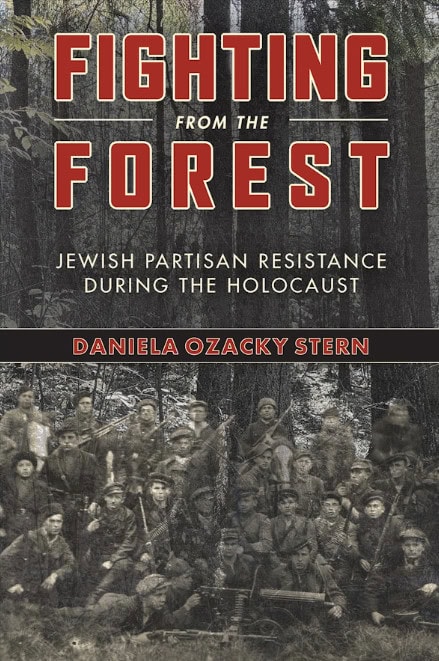
This historic call to action catalyzed the creation of the Faraynikte Partizaner Organizatsiye (FPO), or United Partisan Organization, established in January 1942 under the leadership of figures like Yitzhak Wittenberg and Joseph Glazman. Comprising clandestine cells across various youth factions, the FPO meticulously procured weapons and drafted combat regulations in preparation for an ultimate uprising. However, as the ghetto faced final liquidation in September 1943, the FPO leadership ultimately decided against launching a suicidal full-scale revolt inside the ghetto walls. Instead, they coordinated secret escapes through the city’s sewer systems to the Rudniki and Narocz forests, joining Soviet partisan units to continue the fight from the outside.
This complex shift from internal ghetto rebellion to forest-based partisan warfare left a profound and controversial legacy in Holocaust historiography and Israeli collective memory. In the early decades following Israel’s independence, cultural narratives often drew a sharp, judgmental dichotomy between perceived passive victims—unfairly characterized as going “like sheep to the slaughter”—and active ghetto or forest fighters. Over time, particularly following the landmark Eichmann trial in the early 1960s, public understanding evolved to recognize the profound heroism inherent in daily spiritual resilience, clandestine cultural preservation, and the desperate human struggle simply to stay alive. Today, the foundational proclamation of the Vilna Ghetto underground remains an enduring testament to human agency, dignity, and the unyielding refusal to surrender humanity in the darkest depths of the Holocaust.
More about this unique document can be found in the EHRI Document Blog –
https://blog.ehri-project.eu/2019/06/12/first-call-for-resistance/