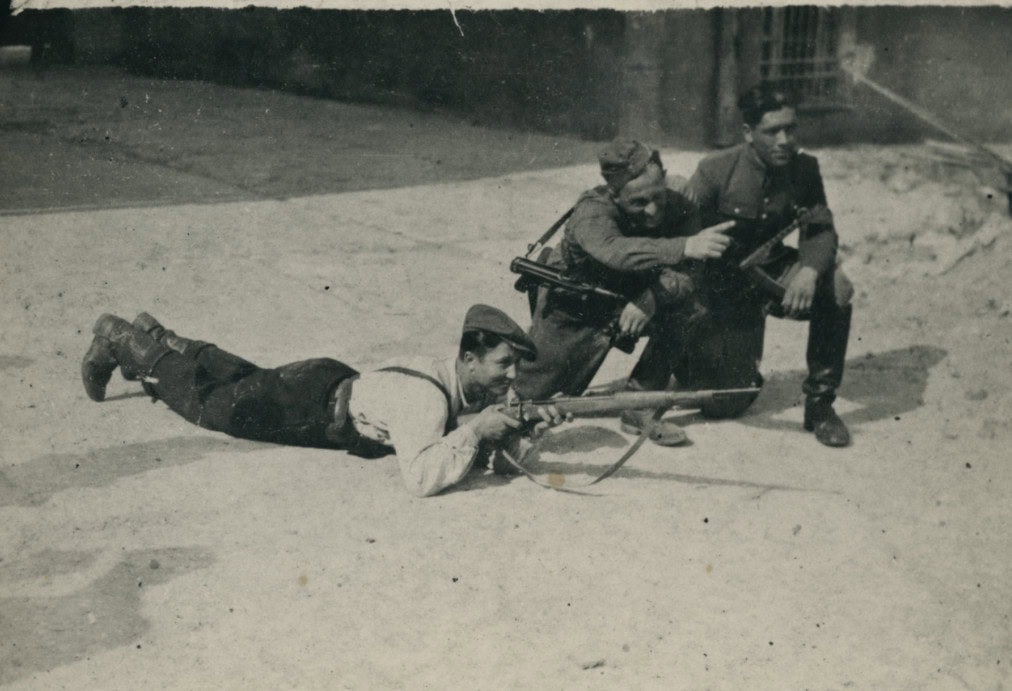
The following chapter focuses on the unique experiences of Jewish women in the framework of partisan units. It seeks to illuminate how Jewish women navigated the unpredictable circumstances they encountered. Women learned how to use weapons and became skilled fighters; some became liaisons, and yet others worked in the partisan kitchen, repaired clothes, and did laundry. Engaging in traditional “female” fields eased women’s acceptance, as these justified women’s contribution to the fighting partisans in Lithuania and Belarus. Women faced additional obstacles such as maintaining hygiene, pregnancy, giving birth, lack of privacy, and more. In order to avoid sexual harassment from their fellow male comrades, some women sought protection by associating with male partners. Many of those couples stayed together after liberation. This chapter aims to incorporate the voices of “ordinary” partisan women into the history of Jewish resistance and their emotions of fear, loneliness, joy, and frustration.
Published in:
Ozacky-Stern, D. (2024). Heroines of the Forest: Jewish Women in Partisan Units in Lithuania and Belarus. In L. Weintrob & J. T. Baumel-Schwartz (Eds.), Heroines of the Holocaust: Reframing Resistance and Courage in Genocide. Oxford: Routledge, 190-202.