“My experience in 1942-45 granted me a clear vision of life that I cannot escape from, for better or worse”: Shmuel Ramati’s long journey from Nováky camp to Israel with no legs
Dr. Daniela Ozacky Stern
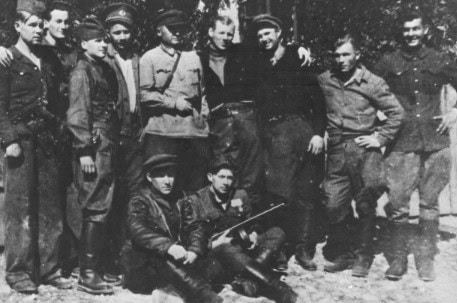
Teodor Neumann was born in November 1929 in Topoľčany, Slovakia, and died as Shmuel Ramati in December 2012 in Bitan Aharon, Israel. In between he had led remarkable life, survived wars and adversities, and overcame losses and severe physical disability. As a child when World War II broke out, he was imprisoned with his family in the Nováky forced labor camp where he spent, according to his testimony, relatively unconcerned life. When the Germans approached Nováky in late August 1944, the gates were opened, and the Jews were able to escape. The Neumann family was split – mother and sister stayed in a nearby village and were later transported to Terezin concentration camp, while father and Shmuel started the long journey to the mountains to join the partisans. The elder brother who was a communist activist joined the Red Army.
Not long afterwards Shmuel lost his father and his two legs. He spent the last year of the war in hospitals and when he could walk again on the prosthesis, he immigrated to Israel in 1946 to join the Palmah, a Jewish underground organization, and in 1948 fought in the war of independence. All this time he tried to hide his disability from his friends and commanders and functioned as a regular soldier.
He later studied and became a much-loved teacher and educator, a talented sculptor and a family man, father to four sons. His incredible life-story is a model of the triumph of the spirit over the body. He used to talk about his experience during WWII in Slovakia to students and varied audiences around Israel, underlining its lessons and morals and not the suffering and hardships. His widow Edna Ramati says that he had always tried to find the bright side in every trial, even in his own memories of the Holocaust, and used to say that keeping their humanity was the true victory of the survivors.[1]
Ramati gave two testimonies about his life in Slovakia. The first was in script, in 1957, when Yad Vashem, the Israeli Holocaust memorial institute, held a writing contest called “Youth under the shadow of gallows”. He wrote in a literary style about his life as a youngster in the Nováky camp. The testimony ends on the day of liberation from the camp and does not tell the rest of the story. The second document is an interview held in 1963,[2] in which Ramati told the full story of what he and his family had gone through in 1941-1946, including during the Slovak uprising and among the partisans.[3]
Reading the two documents leaves an unsolved enigma: in none of them Ramati tells that he was injured while attacking and killing a German sentry, a version he told in later years to his family and students. He just mentions briefly that his legs had been frozen when he fell into a stream. We will discuss this later in the paper.
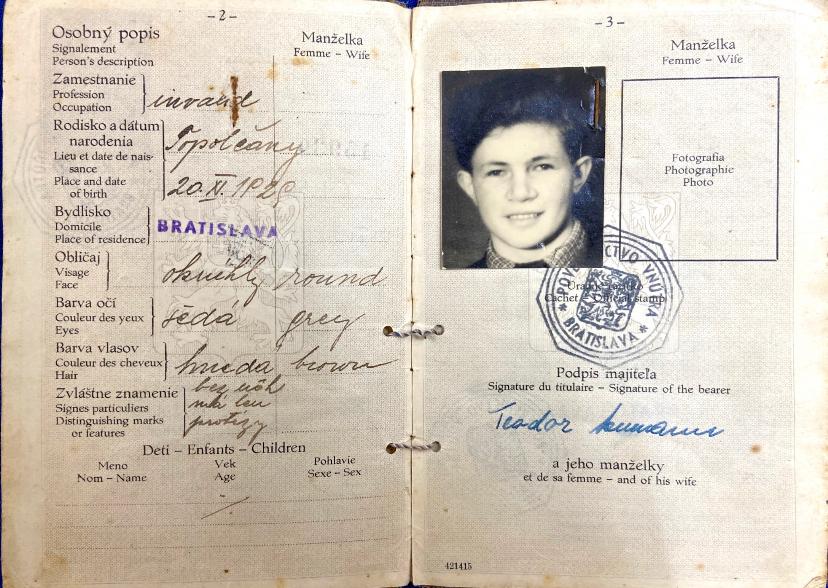
Shmuel Ramati Testimony to Yad Vashem, 1957[4]
In an attached letter to the story, Ramati wrote briefly presented himself as follows:
“I am 26 years old, a teacher of humanities in the high school of kibbutz Ein Ha’horesh. I was born in Topoľčany, Slovakia to Jacob Neumann and Yulia Volstein.
When the war broke and deportations started, I moved with my family to Nováky labor camp for Jews where we stayed till the beginning of the Slovak Uprising on August 28, 1944. I later served as a guard among the partisans, in Nováky and in Banská Bystrica. When the uprising was over, on October 25, 1944, I went out to the forests with my father. He died there and I joined a partisan unit with whom I lived and fought till November 11, 1944, when they took me to a hospital in Banská Bystrica because my feet froze. There, being a POW, they amputated both my legs under the knees. I stayed in the hospital till liberation. Then I moved to a hospital in Topoľčany for a few months and later joined a youth training center in Bratislava. On April 1, 1946, I left Czechoslovakia and arrived in Israel on April 23 legally with a certificate. I was under “Youth Aliyah”[5] organization in kibbitzes… and learnt to be a shoemaker. In August 1947 I was recruited with my group to the Palmah,[6] studied radio operation and participated in escorting convoys. When the Egyptian invasion started in the south,[7] I was stationed with my group at regiment 7 and was appointed officer of communication.
After the 10 days battles,[8] I was sent to a hospital where they operated my legs again and stayed in rehabilitation ward until I was released from the army. After that I studied art and history in a teachers’ seminar (tuition paid by the Defense Ministry) and moved to kibbutz Bar’am[9] where I had lived until 1956 and worked… A year ago, I left the kibbutz and now I am in Ein Ha’horesh”.[10]
***
In his attached testimony Ramati wrote in length about his adolescence in the Nováky camp. The first encounter was traumatic but soon he, like other children, had managed to lead “normal” life and his memories are painted in nice colors and even a kind of nostalgia. Edna, his widow, recalls that whenever he spoke about that time to his own children, he used to tell only the positive aspects of life in the camp – like the solidarity and mutual help, and the freedom he felt despite the barbed wires. His testimony is written in a good and rich Hebrew, poetic and accurate. It ends at the day of liberation from the camp.
***
Following are combined excerpts from Shmuel Ramati’s two testimonies about his experiences during WWII.[11]
First Days in the Nováky Camp
When restrictions against the Jews were issued, they nevertheless kept one law – to let families who lived within the borders of Slovakia stay together. So, if one family member was an essential worker for the economy and the war effort, most cities preferred to move them to the place of work. In our region they concentrated the Jews in three main forced labor camps: Nováky, the largest, Sered and Vyhne. My 18-year- old brother Alinko Neumann was recruited to the Nováky camp as a metal worker, thus, our family had to move there as well.
One bright day in February 1942, about 40 families were loaded on animals’ train cars and led under heavy guard of the Hlinka fascists to the train station in Nováky. Arriving there we were thrown out under screams and whips and started a march of six kilometers to the camp site.
More Jewish families from other parts of Slovakia were there, all together about 100 families with small children and old people. All went through a humiliating process of stripping naked, intimate body search in public, looting and then registration. It was meant to deprive us from our human nature. No one had an idea what would be the next step – would we stay in the camp or be deported to Poland for extermination? I remember how cold it was, freezing outside and cold inside, people were trembling out of fear and chillness and the fascists were just laughing.
We were taken to a huge dark shack with nothing but straw on the floor. Families took their poor belongings and found a corner to stretch on the ground exhausted. Soon all talks and whisperers subsided, and heavy silence fell upon the place. Children fell asleep fast, but the grownups lay awake for hours worried and terrified.
In the morning, the sun shined, we children were curious to look around that strange place. We already knew that we were different from the Jews in the other part of the camp, who were to be deported to Poland. Our group was more “privileged”. On the second day the adults elected a committee, and its head gave his first speech saying that we must prove our productivity so the Germans and their Slovak collaborators would not have any claim against us. Everyone agreed silently. So, in the following days they started acting in subdivisions who spread around the country holding special documents, to purchase goods from Jewish farms and factories. Sometimes they brought with them the owners themselves to help build what had become a small Jewish economic “superpower” to meet the German demands.
Daily Life in Nováky
Soon we could witness a growing industrial enterprise, huge factories of textile sewing uniforms, underwear and more. A carpentry and locksmith’ workshops, a quarry, bricks factory and much more. Otto Mendler, an engineer, was one of the main organizers.
All this time transports from the adjacent camp to Poland continued. In time they had stopped and the three parts of the Nováky camp were united to what the big sign at the southern gate read: “A labor camp for Jews in Nováky”. Jewish Police was formed, its members wearing blue uniforms and holding whips. We heard that in the camps in Poland the Jewish police used to assist the Germans in their plans, but our police never raised their whips on us.
While the grownups were busy strengthening the community and economy, we kids had to go back to school. But there were those, me included, who refused and preferred to work.
At first, I worked in the uniform factory under one of the best tailors in Slovakia at the time, but soon I was bored. One day I collected pieces of cloths, leftovers from the sewing machines, and made small mice. I threw them in beds of old women who became hysterical, and few even needed medical treatment. That was the end of my tailoring career.
We were a group of kids who decided to start our own initiatives. One of us used to grow silk warms and we had an idea to create a workshop to produce silk. We went to Mendler who was very sympathetic and gave us a place to work. The carpentry made special tables for us. A time of freedom started. We were allowed to go out of the camp and look for eggs and warms and then to collect mulberry leaves for them to eat. As it has developed and we were about 30 kids engaged in this project, an adult was nominated to run it. He arranged for wagons and later trucks to bring the food to the growing number of warms who grew hungrier and fatter. At the end, when they turned into cocoons, they were moved to another factory to produce the thin delicate silk threads, and our beautiful shack remained empty.
Thinking of an alternative we came out with the idea to raise angora hares. Again, Mendler agreed to help and in two weeks we got two dozen pregnant hares. We took good care of them and soon they multiplied and gave a lot of angora wool. The first crop was of 20 kilograms. Mrs. Fridman, who was experienced in spinning got a primitive spindle and made beautiful sweaters and pullovers. She guided other women and the factory prospered and had become profitable. However, there was pressure on us to go back to school despite our success, and after long negotiations we agreed, in condition that twice a week we would be allowed to work. School was now bigger and more organized with good teachers who taught all topics. We had exams, grades, and certificates. Gradually they managed to create for us a kind of “normal” world. There were sport fields and in the second summer even a swimming pool had been dug, almost by hand with the entire camp population volunteering to work. We even published a school newspaper. I think that we were the only Jewish kids in Slovakia at that time who could express themselves in writing. It filled us with a sense of importance. We had to submit the material to the censorship of the fascist commander but nevertheless managed to type, print, and distribute it weekly.
In the summer of 1943 children of the camp were allowed to spend vacation in homes of Jews who stayed in the cities due to their importance to the economy. I was sent to Banská Štiavnica, a beautiful mountain place in central Slovakia, where there are mines, including pits of gold. I remember watching how gold was melted to make coins. The most surprising thing was that those Jews, who lived outside walls and fences, seemed to have worse life than ours. For the next summer of 1944 we invited 140 of these Jewish children to spend their vacation with us in Nováky camp. We took them for trips in the forests and played outside. They enjoyed it a lot.
And then came August.
The Underground in Nováky
As youngsters who were wandering in and out of the camp, we were sometimes sent to do errands for the underground organization. We did not know what they were planning but could tell that something was going on. They would send us to take messages to people outside the camp, near the coal mines. We always went in groups and played in a certain place where vast meadows stretched between the trees. While playing someone would approach us and ask if there is something for him and we would give him the note without knowing its content. As far as I know – none of us dared open those notes.
The main person who was in touch with us in these matters was Špitzer.[12] Many evenings we had gathered, and he would play the guitar, sing, and tell us stories about the civil war in Spain. It was a kind of “education for freedom”. He also guided us how to behave when Dieter Wisliceny visited the camp and how to keep secrets. Our teachers were also involved in those preparations towards visits of high rank officials and instructed us not to give away any information.
Towards the end of 1943 we heard rumors about partisans approaching the area, among them Russians. I remember one Russian who visited the camp, played volleyball with us, took part in our singing evening, and even went with us to the meadows. There were whispers that he was a partisan but as children we did not pay much attention. We realized that it was true only later, on August 29, when he showed up in the camp with a group of partisans, wearing Russian boots and a red star on his cloths.
I knew about two underground groups in the camp – one small Jewish-Zionist which its center was in Sered, and the more established communist group, some of its members had participated in the civil war in Spain. They were better organized, and their main action was forging documents for Jews and others so they could escape. But this was stopped when someone was arrested and interrogated and confessed that he gave his documents to another man. This other man was my brother and they arrested him for a few days and searched his room where he kept Marxist literature. My brother joined the communist party back in 1938. They soon released him because he was a prisoner in the camp anyway and also because he was the only electrician in the camp, and they needed him for work.
Since I lived with my brother at the same barrack, I knew about their efforts to smuggle arms. Every now and then when I was cleaning the room, I would find parts of pistols or guns, Nagans (revolver) and Parabellums – never full weapons, only scattered parts. My brother did not send me on missions because it was not customary to risk one’s family member. There was a silent understanding between us – he knew that I was aware of his underground activity, but we never talked about it. Most of the young people who lived in our barrack were part of the undergrounds.
Last Days in the Camp
Huge unrest had been felt at the camp since the end of July-early August 1944. There were rumors that Slovakia might change sides and support the Soviet Union (like Rumania did). It was already known that the Germans must withdraw via Slovakia and if they took control, they would implement the “Final Solution” against the Jews. In addition, it was understood that the Soviets also must cross Slovakia if they wanted to push the Germans further. Therefore, everyone was alert and a semi-organization of mass escape started and plans to join the resistance were made.
On August 25, 1944, they announced the Slovak government decision to withdraw from its pact with Germany and the Nováky camp became unrestful.
The gendarmery was afraid that the whole camp population might run away, and they wanted to calm us down. One day we heard on the camp loudspeakers the commander declaration that the Jews must not fear, and he swore to let us escape if there is a danger of Germany occupying Slovakia. He also ensured us that he is keeping telegraph contact with the authorities, so he should know when danger is coming. In a few days people stopped working and were prepared to leave with their luggage ready. Updates from the front were given constantly over the loudspeakers.
Soon we heard that the uprising had started. No one was thinking about the future and what it entails for us, we were so happy, it felt like instead of blood we had joy and fire flowing in our veins.
The Night of the Escape
At the night of the uprising my brother and his friends were running around to collect the parts of the arms hidden in different places and they assembled them all night. In the morning 70 camp inmates were armed and went out to their first battle near Baťovany. It was their first military experience.
Only on that night we realized that the missions we had carried out as children were part of the underground activity. As far as I know, most camp inmates did not support the underground and resented it. The visitors from the Jewish Center – Oscar Neumann and Rabbi Fridel always warned us not to be dragged by the hot-tempered youth and not to endanger the life we have had. I remember Neumann’s speeches, how he said that there are people who think only about themselves and forget the public interest.
The common knowledge among the public was that if, and when they escape – it would be together and under the order of the headquarters, and that anyone who takes the initiative to run away separately puts the others in danger. This was odd, because how did they imagine such a huge crowd escaping together? They were sure to be discovered and caught.
On the last evening we heard shots of machine guns, I remember thinking that this was the first time I hear shots. We, the young ones were posted by the telephones in case someone calls and gives orders. I myself was a go between who delivered messages and notes in the middle of the night.
At 3:30 at night, the partisans entered the camp. The next morning a siren was heard followed by announcements saying that all restrictions are lifted and that everyone is free to leave. They also explained where trains are to be found and which are the areas controlled by the revolutionary government. The camp commander ordered the guards to stay inside and not to take their posts. However, he refused to give the guards’ weapons to the partisans, but they took it anyway without any resistance. They left the guards prisoned in the camp for three days, while the inmates had left.
At 10 o’clock in the morning the last Jew left and had the honor of taking down the big sign from the gate which said “Nováky Labor Camp for Jews”. This labor camp no longer existed, and its inmates were set free.
First Days of Freedom
On that same day, my family moved to a small village nearby Cigeľ. The next morning, I returned to the camp to bring my sister who stayed behind, and to find out what was going on and what could we do next, because there was no point in staying in that remote village and wait for the mercy of God. The camp was almost empty but for a group of partisans who were foreigners to us.
I found out that they needed people to guard and defend the camp and its property, so I got a job with a few other young Jews. They gave us arms and short training, a real fighting training, we regarded it as an adventure. They gave us an assignment to accompany the camp former guards to Topoľčany. When we arrived there, we met armed units, some of whom we met later in Banská Bystrica, they were active in the uprising.
Back in Nováky a military man trained us further how to use guns, move and cover, attack, entrench, use hand-grenades – the basic fighting actions. We were mostly 14-17 years old boys, and some adults. Training was short and after 4-5 days I was posted for a night watch. The camp held valuables – the private possessions of the former inmates and the factories’ equipment. We guarded against looting by the locals. But the locals looked upon us with sympathy, they themselves were recruited to build fortifications and trenches. However, we also encountered Antisemitism and complains were heard that everything is done to protect the Jews and liberate them, but they are not taking part in the hard work. True, there were Jews who did not work because they were busy looking for shelters for themselves and their families. I cannot judge them now, but in retrospect they might have been right. The fact of the matter is that me and my father could not take my mother and sister along with the military unit when the defense lines collapsed in Zemianske Kostoľany and had to leave them behind while we withdrew. They were caught by the Gestapo and never saw father again and I ended up badly. Maybe, if we had taken care of the family on those days – it might have been different.
The Journey to Banská Bystrica
I walked to Kostoľany and met my father and brother on the very day they blew the petrol containers so the Germans would not seize them. There was already German bombardment. Withdrawal was chaotic, no discipline whatsoever, the units collapsed, the area was surrounded by Germans and only one direction remained open – towards Handlová. People just tried to save themselves.
I stayed with my bother for a few days but later he went with his Jewish unit to another place. I know that he visited the Gestapo disguised and brought my mother and sister some food and clothing. At the end of December, he flew to the USSR and was trained politically and militarily than returned with the Soviet Red Army as an NKVD officer and proceeded to Vienna with the army as a politruk. Later he came back and got a governmental job in Czechoslovakia where he stayed after the war and married a local woman. My bother’s end was tragic. After years of serving the communist regime which collapsed in the early 1990s, he was murdered and drawn in the Danube by its opponents and his corps was found in Hungary.
Me and my father started our journey to Banská Bystrica because there were people there engaged in saving Jews and we wanted a solution for mother and sister. We met many Jews on the way and used to take random rides with trucks and carriages until we arrived.
In Banská Bystrica a new chapter started. We were put in the local Jewish school with many others and approached the partisan’ headquarter. They immediately sent me to work as a guard of what they called “unreliable elements”, former Halinka members or Volks-Deutsche who were employed in digging trenches and building fortifications. At first there were not enough weapons for all the guards, but that has changed when the first German Prisoners of War arrived, and we were given their guns. My father held a different task – he was an expert in quarries, so they took him to advice and inspect the drilling of pits around a big train tunnel, in order to blow it up when they withdraw. He was not paid but got food stamps. Both of us were employed till October 23.
As far as I know Jews refrained from joining the Slovak Army and I guess the army too was not eager to take them. After all – this was an army of a fascist regime. The partisans, non-Jews as well, resented the army because it was bureaucratic and concerned mostly with officers’ roles and procedure instead of posting soldiers in strategic places. Also, it was obvious that there was a rift inside the regime itself which would later influence the uprising and lead to wrong moves.
Most Nováky Jews who lived in the school in Banská Bystrica did not join the partisans, many of them were underage. They always stuck together, even after the war. They were very productive and knew each other well, so they figured that living together would benefit them.[13]
About the Jews’ attitude towards the uprising: There were those who participated and others who thought that they should wait for a solution to the Jewish situation and that recruitment would not solve their problems.[14] Indeed, during the uprising there were many incidents of Antisemitism even though it was not allowed officially among the partisans. It was less felt in Banská Bystrica, due to its Lutheran population which was not under the Catholic hegemony.
After the Uprising
After the failure of the uprising, we withdrew to Staré Hory where we heard that all roads are blocked, and that it is better to reorganize in the forests. Again, a chaotic withdrawal occurred, families were torn apart, robbery and stealing of food, no order whatsoever. German bombardments caused a real massacre. We found refuge in a shack inside the forest and met many Jews and others hiding. There was a harsh argument whether it is safe to hold on to whatever arms we had or to get rid of it in case the Germans capture us. Me and my father and our friends collected arms because we knew that the German would kill every Jew anyway – armed or not. So, I held to my gun for hunting for food and for committing suicide if I am caught.
On November 29, we started towards Prašivá, a steep crossing in the mountains. It was raining and snowing hard. Suddenly we heard shouts in German: “Go down, do not climb up!”. No road could be seen only a slippery meadow. It was so crowded, people hung to each other’s legs and instead of helping themselves they hampered the others. Suddenly we heard the shouts again – “go down!”. It was obvious that no friend would advise us to do so. Most people continued to climb. Later, when all was over, we saw a dreadful scene – the Germans shot indiscriminately at the crowd who went down, impossible to estimate how many were killed or captured. After the war they discovered there a large mass grave.
I still cannot understand how we managed to climb; it was only by the force of awareness of the dangers awaiting us. When we reached the top, we saw a huge plain encircled by forests. We walked in the fog to an unknown destination, met people who warned us of Germans here or there, and people turned around walking to different directions… I would never forget this sight, human beings wandering around with no control of themselves, it was unhuman. We had nothing to lose, we spent so much energy on this aimless walk, and it was getting dark. In the first place which seemed fit we dug a small burrow, me and my father, and fell asleep.
With the Partisans and the Injury
A partisan we met the next day started organizing us as a unit, we were about 80 people. We did not identify as Jews and did not ask others for their religion. Our main roles were to disrupt German transportation on the roads and guard the partisans who were concentrated there. We did harass German transports, attacked their heavy vehicles, and caused them fatalities. They would leave their dead behind, and we would take their arms.
On November 11, all our provisions were gone, and we remained without food for several days, every now and then hunting or eating snow. It was very cold, and we were ordered not to take off our shoes and cloths, so not to freeze. We slept in the open under the snow, it was comfortable, warm. One day when we were posted on guard my father disappeared. I was permitted to look for him, found pieces of his clothing but did not find him. I suppose he died freezing, or maybe was killed by the Germans, I never saw him again.[15]
I was left alone.
Someone from the group took his shoes off and his feet got immediately swollen and frozen, he could not walk again, lost his mind, and died. I saw this and decided not to follow suit and to keep my shoes on all the time. This was my predestination, because during the days my feet got wet and at night they froze, so it felt like an icy bandage.
On November 14, the unit decided to go down to the village of Moštenica not just to get provisions, but to occupy the whole place. I was the youngest, less suspicious, so they sent me forward to check if there were Germans on the bridge that led to the village. I was given a pistol and had to jump over the stream to the main road. If I saw a German sentry – I should get rid of him, that was the order. I was a good athlete, so I believed that I could jump over the crick which was a few meters wide. But my legs were heavy and rigid and one of them hit the water. I immediately felt huge pain but continued walking. There was no guard on the bridge.[16] Before going back to the forest, I collected some information and found out that the Germans had left the village. I told my friends that, and the whole group went down to a local inn where they gave us food and drinks. I wanted to take a shower. It was over three weeks since I had washed. During that time, I cleaned myself only with snow. I knocked on a locals’ door. I must have looked miserable, so they welcomed me with food and let me wash myself. For that, I had to take my shoes off. Looking at my bare feet I noticed cold blisters and burns stage 2 (based on my experience in the scouts I could tell) and knew that I need emergency medical treatment or else I die. I asked my hosts to tell the unit commander that I need to be sent to a hospital, he came to see me and said: “they are going to kill you there, you are a partisan!” to which I answered – it could not be worse, I need to get to the hospital. So, the local villagers took me by carriage to a nearby town. On the way we encountered German guards and the villagers told them that they are taking a sick man to the hospital, so they let them pass.
In the hospital they asked me how it happened, and I said: “I was in the forest, I am a partisan, and this is what happened”. They registered me as a POW and put me in a special shed of prisoners. I gave a false name and said that I have no papers. On November 21, one day after my 15th birthday, they amputated one leg and five days later – the second leg. I stayed there up until the liberation of Banská Bystrica on March 25, 1945.
The doctors and the director of the hospital were Slovaks, but they were under the inspection of the Germans. They never asked me if I was Jewish, but I am certain that they knew the truth. The director was an extraordinary man.[17] I know that there were few more Jews there, one of them with forged papers and another who identified as a Jew and was also considered a POW. The priests – both Lutheran and Catholic – used to bless me and pray for me and execute all the holy ceremonies beside my bed. After the war they confessed that they knew I was Jewish but said that saving a human soul is more important. They had shown nobility and sanctity. The Germans did not interfere with the hospital day to day work, all they did was to post guards outside it.
Author’s note: The Ramati family and all his friends heard another story about the day of the injury: When Shmuel approached the bridge, he saw a German guard walking. He attacked him and they both fell to the water. The German was drawn and froze to death, and Shmuel managed to get out and inform his colleagues that the road was clear. Edna insists that this is the only story she had heard from him and that when they were in Slovakia, he took the family to that very place and recounted the details of the event.
If this is the truth, it is a heroic story, so why did he conceal it in both testimonies and only told it much later? His wife’s presumption is that being a gentle and sensitive person he did not want to admit killing a human being, even though he was an enemy. On the other hand – if there was one German on the bridge it is probable that there were others in the village. It seems like this riddle would never be solved.
After the War
When the war was over, I got a military transportation to Topoľčany… and was taken to the local hospital. My mother and sister came back from Terezin and my brother returned from the USSR. They took me to Bratislava where I got prosthesis.
There I was registered as “partisanski”. When I recovered and decided to emigrate to Israel the Slovak Foreign Ministry forced me to apply for citizenship and when I got it, I had to yield and sign a paper giving up all the rights I was entitled to as a citizen and a war invalid. Much later I tried to apply for some pension, but they refused and showed me that document signed by me, so I was done with them! I came to Israel, (which was then under British Mandate) in April 1946.
In Retrospect
When asked about his feelings looking back at what he had gone through Ramati did not hesitate:
In Nováky I encountered my Jewishness for the first time. I grew up in a secular home and joined a Socialist Zionist Movement. Only in Nováky I learnt to appreciate the good Jews who could organize their economic, social, and cultural life splendidly despite living in a wired camp. My parents too regarded Nováky as a unique experience where we had discovered the sources of vitality and solidarity in us, qualities that we had not realized we possessed. The climax was during the uprising – when our best fellows took part in it. This meant that we still had hope that we are not alone and that we can find a collective solution together. In Nováky I learnt to love my people, it grants me strength until now. I also learnt that as much as I succeeded to disguise as a non-Jew, as a citizen like everyone in Topoľčany, in the uprising and after the war – the moment they found out that I am Jewish, things had changed.
The life experience I acquired in 1942-45 had directed me in a clear way of life that I cannot escape from – for better or worse. I could have stayed in Slovakia and enjoy the status of a former partisan. My brother who married a Slovak woman and stayed begged me to do so and go back to school. The government also encouraged it, but I was guided by my experience and was determined to go to the land of the Jews.
In the Holocaust period one kind of Jewishness had been eliminated, but here and now we are creating a new kind!
***
In September 1994, Nováky camp survivors in Israel gathered in Ramat Ha’sharon, a city in central Israel. In his opening speech Juraj Ŝpitzer contemplated the memories from the camp and their meaning: “Despite the oppression, hate and fear”, he said, “for me Nováky symbolizes the creation of a new culture, a new nation. We were a random group of people who had overcome loss and depression but chose life, formed a creative community, active in culture, education, and sports, never surrendered to slavery. We were a semi-independent people who towards the end even established its defense force. This was the place in which, with all regret, we had grown up and matured”.[18]
These words seem like an echo of other survivors’ feelings as well and correspond with the way Shmuel Ramati interpreted his two formative years in the camp.
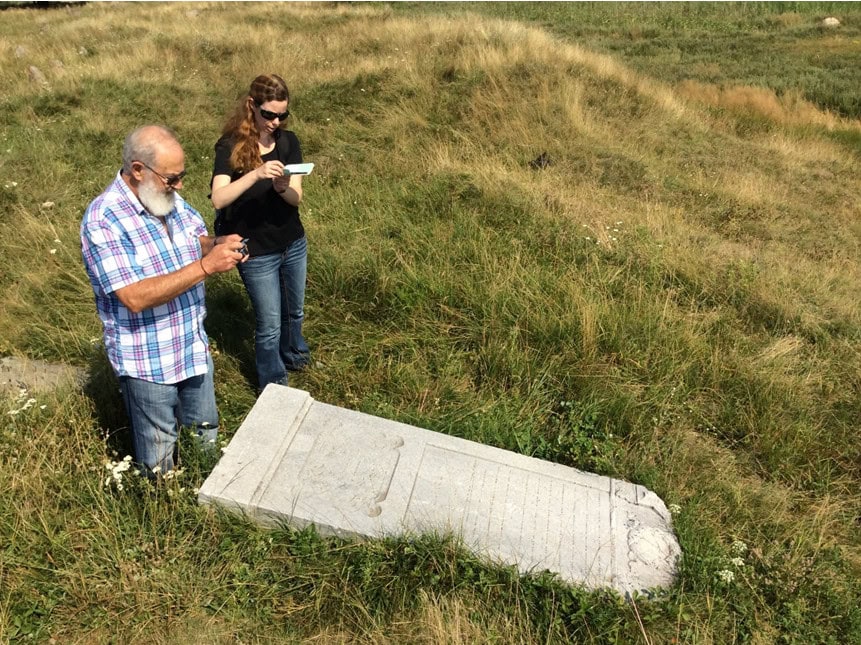
When he left Czechoslovakia in 1946, Ramati vowed never to return. But in 2003-2004 after his retirement, he suddenly suggested to his wife to go there and stay for a year, which had expanded to three years, “the best time of my life” says Edna. They visited all the milestones of his early life, sometimes with their children, and he told his story time and again. After all, this was the place where he had been shaped as a person, where, according to his testimony, he got “a clear vision of life that I cannot escape from, for better or worse”.
In the last years of his life Shmuel and Edna Ramati had lived in an assisted living facility in central Israel. He had time to devote to his art and kept a sculpture workshop where he had spent long hours. With four sons and nine grandchildren life was good and busy.
One ordinary day Shmuel was lying on a high treatment bed and when he was done, he stretched his arms to take the prothesis standing aside. For an instance he lost his balance and fell, hitting his head badly. A few days later, at 83, Shmuel Ramati died due to his injury of 68 years before. Thus, the cycle of his remarkable life was completed, leaving a heritage of extraordinary courage, optimism and hope.
[1] Interview with Edna Ramati, Bitan Aharon, Israel (May 2, 2021).
[2] Interviewed by Yeshayahu Jelinek. The full text in Hebrew is in: Moreshet Archive, A. 177.
[3] This interview is part of a corpus of several dozen interviews held by Prof. Yeshayahu Jelink and Akiva Nir for Moreshet Archive in Israel in the early 1960s, which had been hardly used in research. Ramati’s testimonies were not even known to his own family.
[4] The original text in Hebrew is at Yad Vashem Archive, O.39-119.
[5] A Jewish organization that rescued thousands of Jewish children from the Nazis during and after the war and arranged for their resettlement in Israel kibbutzim and youth villages that became both home and school.
[6] An underground that resisted the British Mandate in Palestine.
[7] The Arab invasion started on the night of Mat 15, 1948 the day of the Declaration of Independence of Israel and the evacuation of the British army from Palestine. The Egyptian army headed from Gaza towards central Israel but had been stopped.
[8] Battles that took place between July 8-18, 1948, all over the country and had changed the strategic situation in favor of the Israeli army.
[9] Bara’am is situated on the border with Lebanon in the north of Israel. Ramati was one of its founders after the war of independence.
[10] A letter to Yad Vashem, 1957 (no exact date), Yad Vashem Archive, O.39-119.
[11] Shortened and translated by the author of this paper.
[12]Juraj Ŝpizer later wrote his memoires from the camp in his book: ŜPITZER Juraj, I did not Want to be a Jew (Pittsburgh, Pennsylvania: Dorrance Publishing, 1997).
[13] 200 of Nováky Jews took part in the uprising in an organized unit. See Daniela Ozacky Stern, “Testimony from the Moreshet Archive: Jacob Spira, a Medical Doctor in Nováky Forced Labour Camp”, Judaica et Holocaustica, Vol. 10 (2) (2019), 66.
[14] About Jews participating in the uprising see for example: Yehoshua (Robino) Büchler, “Jewish fighting and the fighting of Jews – the case of Slovakia”, Moreshet Archive, D.2.1263; The Book of the Jewish Partisans, Vol. 2 (Merchavia: Sifriat Po’alim, 1959), pp. 291-314.
[15] In later years Ramati told the story that his father heard at that time that his wife and daughter were taken to a death camp and could not tolerate this. He ran away crying and shouting and then disappeared never to be found. The wife Julia and daughter Pnina survived the war and immigrated to Israel in 1949.
[16] See another version of the story and a discussion later.
[17] Edna remembers Shmuel’s story that the doctors put a sign on his room door which read “Typhoid”, so no one dared entered to check his identity.
[18] Juraj Ŝpitzer, “Stretnutie Bývalých väzňov konc. Prac. Tábora Nováky 29. Sept. 1994 v Izraeli”, Koncentračný a pracovný tabor pre židov Nováky 1942-1944 (privet publishing, no date).
Published in:
Ozacky-Stern, D. (2020). ‘My experience in 1942-45 granted me a clear vision of life that I cannot escape from, for better or worse’: Shmuel Ramati’s long journey from Nováky camp to Israel with no legs. Judaica et Holocaustica 11(2): 61-76.