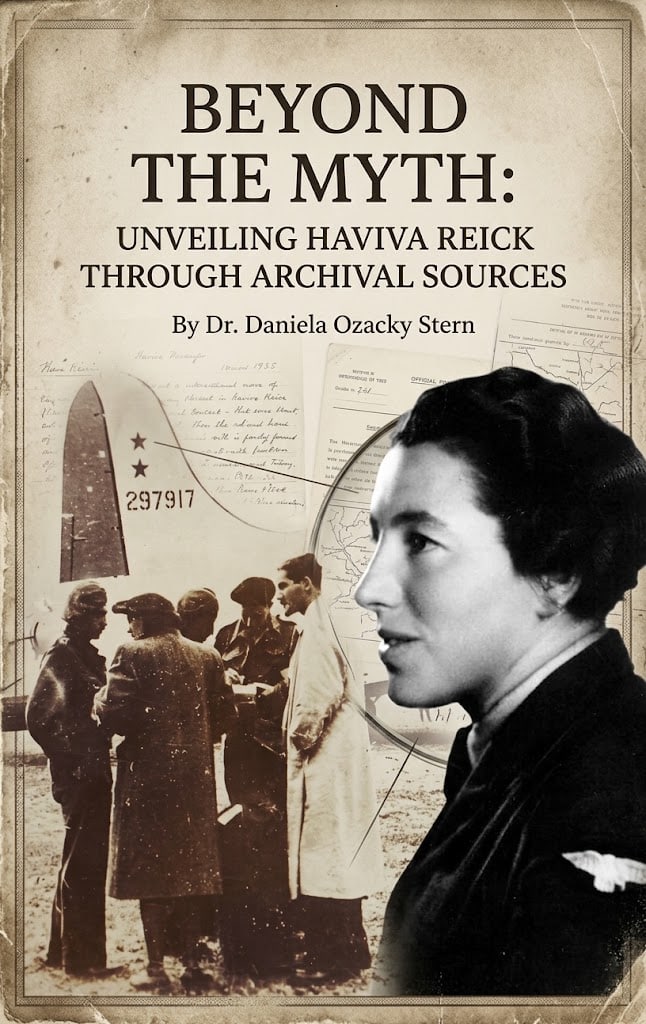
When we encounter historical figures through the prism of official commemoration, they often risk becoming static monuments—plaster casts of courage stripped of human texture. In the public memory of Israel and Slovakia, Haviva Reick is universally revered as a national heroine: a fearless Palmach commander, a British Special Operations Executive (SOE) agent under the cover name Sergeant Ada Robinson, and a courageous parachutist who returned to her torn homeland during the 1944 Slovak National Uprising to save her people.
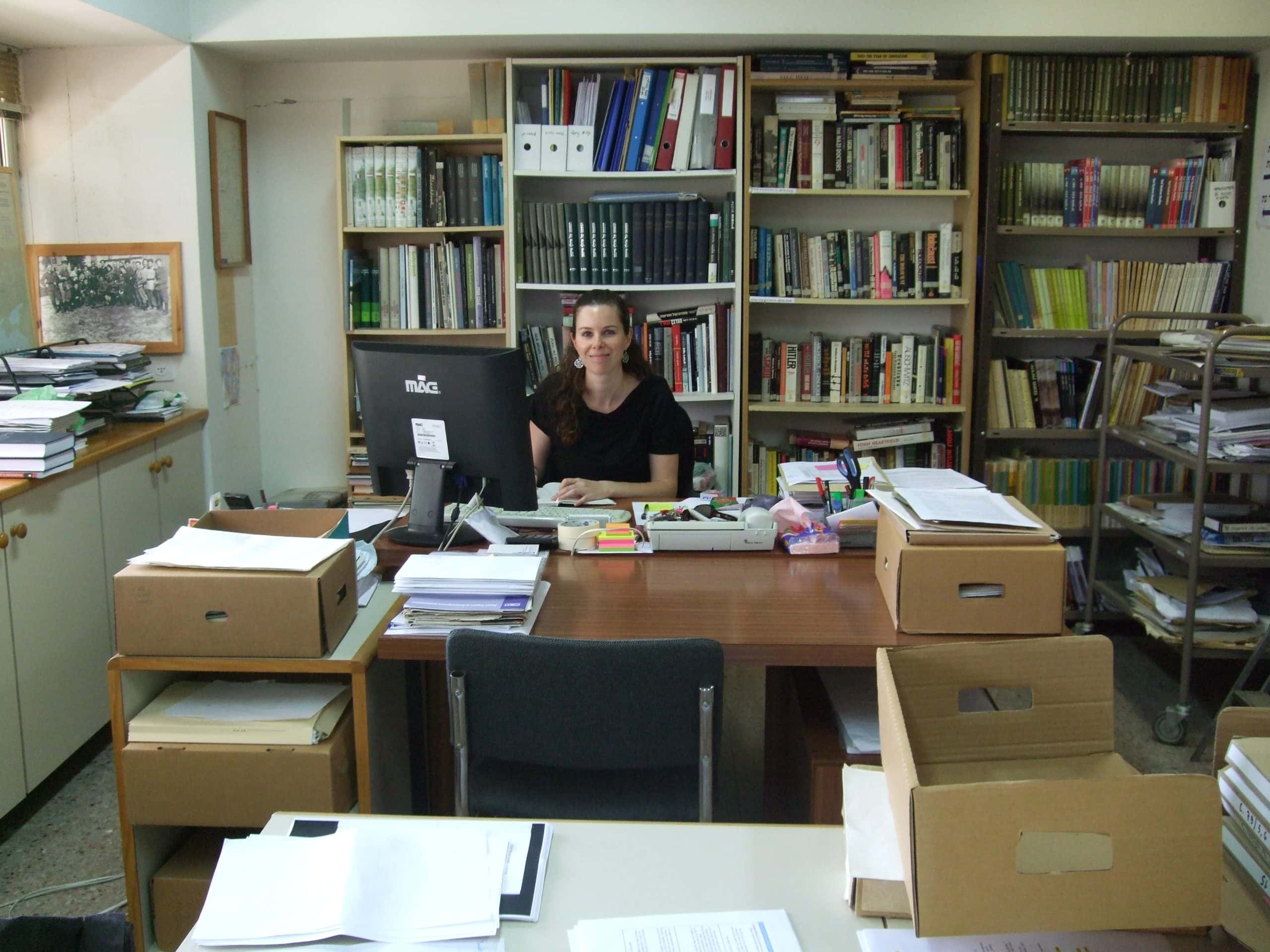
Yet, during my tenure as Director of the Moreshet Archive in Givat Haviva, working alongside scholars and survivors—most notably Robert Jehosua Büchler (“Robino”), a survivor of Topoľčany, Auschwitz, and Buchenwald who devoted his life to documenting Slovak Jewish history—I came to realize that the true power of Haviva’s story lies not in the myth of invulnerability, but in the physical paper trail she left behind.
To hold Haviva’s handwritten letters, her Slovak-Hebrew vocabulary lists, her Red Cross telegrams, and wartime intelligence cables is to step beyond the textbook narrative. The archive reveals a woman who was fiercely independent, modern, intellectually driven, and emotionally vulnerable. Her fearlessness was not a cold absence of fear; it was a conscious, agonizing moral choice made by a woman who desperately wanted to live, love, raise a child, and build a peaceful home, yet repeatedly chose to place the survival of others above her own self-preservation.
The Roots of Independence: Marta Reicková
To understand the agent who jumped into the fires of occupied Europe in 1944, one must return to the poverty of her youth in the foothills of the Tatra Mountains. Born Marta Reicková in 1914 in the small village of Nadabula (now part of Rožňava) and raised in Radvaň nad Hronom near Banská Bystrica, her early life was defined by financial hardship and social flux. The collapse of the Austro-Hungarian Empire and the birth of the First Czechoslovak Republic created a dynamic yet turbulent landscape for Central European Jews.
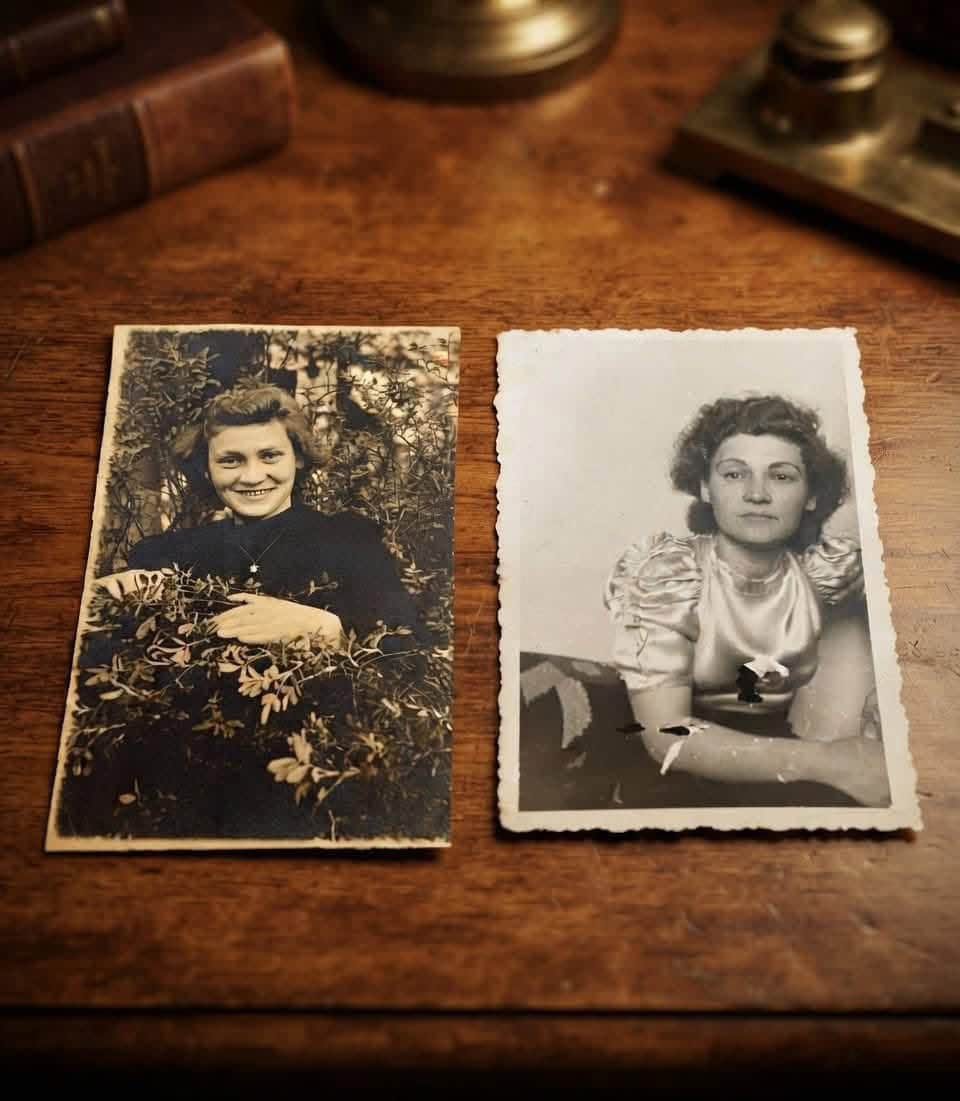
Marta took charge of her fate at a remarkably young age. Denied formal higher education due to family poverty, she became a skilled clerk and bookkeeper. By the age of eighteen, she was a familiar sight in the towns of central Slovakia, zipping through rural roads on a motorcycle—an extraordinary image of female autonomy in the 1930s. She volunteered for the Red Cross, joined the local fire brigade, and immersed herself in social organizing.
It was during these formative years that her Zionist consciousness crystallized within the Hashomer Hatzair youth movement. She fell in love with and married Aharon Martinovič, and together they prepared for aliyah. In late 1939, as the fascist, pro-Nazi Tisó regime transformed Slovakia into a puppet state and launched systematic anti-Jewish persecution, Marta and Aharon escaped to Mandatory Palestine. Settling at Kibbutz Ma’anit, she adopted the Hebrew name Haviva.
Though her marriage to Aharon eventually ended in divorce, their bond transformed into a deep, lifelong friendship. The archive preserves tender, intimate correspondence between them long after their separation—letters in which she is seeking his emotional guidance and sharing her private fears as she moved toward her ultimate mission.
The Inner Conflict: Hanita, Cairo, and the Price of Duty
Standard military histories frame Haviva’s enlistment in the Palmach and her subsequent recruitment into the British SOE as natural, straightforward steps in a hero’s journey. The archival correspondence reveals a far more complex internal struggle between personal longings and collective responsibility.
In January 1943, writing from a cold, windswept tent in Hanita where she was stationed with the Palmach, Haviva laid bare her quiet grief over the passage of time and her yearning for motherhood. She wrote to her close friend:
“A child is such a great thing. I often regret that I do not have a child. Who knows when we will start a normal life again, and whether I haven’t missed my chance… Well, why am I writing all this to you? It is one of the questions that constantly crosses my mind.”
This deep desire for family and stability was not a passing whim; it was the anchor of her humanity. Yet, as terrifying Red Cross postcards arrived from Slovakia, conveying coded messages of deportations to Auschwitz and Majdanek, Haviva’s personal dreams collided with her moral conscience. When British intelligence approached Central European immigrants to form a clandestine rescue and intelligence unit behind enemy lines, she did not hesitate to volunteer.
By June 1944, undergoing grueling commando, parachuting, and radio transmission training in Cairo alongside fellow Jewish recruits, the psychological strain reached its peak. Isolated in the intense Egyptian heat and facing an uncertain future, she wrote a profound piece of self-analysis to her close friend Chana:
“In a few days I will be thirty years old… Years pass quickly and there is still so much to accomplish… But this has been the constant struggle within me ever since I joined the movement: personal happiness versus the fulfillment of duty. More than once these two forces collided, and the stronger one won.”
What makes these letters so extraordinary is their absolute lack of posture. She did not view herself as a martyr or a romantic warrior. She loved sports, cinema, reading, knitting sweaters for her loved ones, and spending quiet moments with animals—the Moreshet collection includes touching recollections from her kibbutz peers about her affection for dogs and nature. She wanted to live. Yet when forced to weigh her own happiness against the catastrophic plight of her people, her sense of duty consistently prevailed.
The Clashing Realities of Operation Amsterdam
The operational history of Haviva’s mission—code-named Operation Amsterdam by British intelligence—is a study in adaptability under extreme pressure. In the archive, one finds the vivid recollection of how Haviva’s sharp intelligence and commitment to security manifested right before deployment. While inspecting supply crates in Cairo containing radio transmitters and equipment, she noticed the bold label “Operation Amsterdam” painted on the side. Recognizing that using the known underground code name in open transit was a catastrophic security breach that could alert Axis agents, she launched a fierce protest until the crates were repainted and secured.
On September 18, 1944, unwilling to wait passively for delayed British military flights, Haviva secured transport with an American B-17 flight landing at the Tri Duby airfield near Banská Bystrica, entering the heart of the liberated zone during the Slovak National Uprising.
Upon landing, she discovered that her male parachutist colleagues (including Zvi Ben-Yaakov and Rafael Reiss) had not yet arrived from the surrounding mountains. Recognizing that her childhood roots in Banská Bystrica posed an immediate risk of recognition by local fascists, she acted with characteristic tactical decisiveness: she transferred her radio equipment to Podbrezová, established operational contact with Slovak partisans, and organized search parties near Krížna until her team was fully reunited.
When the parachutists gathered in Banská Bystrica, they encountered a situation entirely different from their military instructions. The British SOE had trained them primarily for covert intelligence, collecting data on enemy troop movements, and assisting downed Allied airmen. However, Banská Bystrica—a provincial town that had suddenly transformed into the administrative capital of the uprising—was overwhelmed by an influx of tens of thousands of displaced persons. Among them were thousands of Jewish refugees, orphaned children, and elderly survivors fleeing Nazi-occupied areas of western Slovakia.
Four Weeks of Transformation: Relief, Resistance, and Solidarity
Faced with widespread destitution, cold, and a disturbing resurgence of local antisemitism among displaced populations who viewed Jewish refugees as competitors for scarce food, Haviva altered the mission’s priorities. For four intense weeks, the military intelligence agent became an extraordinary organizer of social relief and human rescue.
To fund relief efforts in a collapsed economy, Haviva drew upon her pre-war financial experience. Executing a brilliant “transfer” arrangement, she approached wealthy local Jews who held capital but lacked liquid funds, raising 180,000 Slovak korunas against written commitments that the Jewish Agency in Palestine would reimburse them or their relatives in British pounds after the war.
With this capital, she co-founded a local relief committee alongside underground leaders such as Egon Roth and Andrej Steiner. The results were immediate and widespread:
- Soup Kitchens and Basic Relief: Supplying hot food, winter blankets, and essential medical supplies to hundreds of impoverished refugee families living in makeshift shelters.
- Productive Workshops: Establishing sewing and tailoring facilities that employed Jewish women to manufacture uniforms and gear for the Slovak insurgent army, thereby providing refugees with legal status, wages, and vital protection from local hostility.
- False Documentation: Fabricating official identification papers and travel permits to allow targeted individuals to slip through fascist checkpoints.
- Allied Airmen Rescue: In accordance with SOE directives, housing, feeding, and facilitating the safe evacuation of approximately 60 downed American and British airmen through insurgent lines.
One of the most moving encounters preserved in the oral histories of the archive involves her secret meeting with Rabbi Ungar of Nitra, one of the most revered spiritual leaders of Orthodox Slovak Jewry, who was hiding in Banská Bystrica. Despite the ideological distance between a secular, socialist Palmach pioneer and a Hasidic rabbinic authority, Rabbi Ungar was so moved by her presence and selfless devotion that he blessed her, declaring: “My daughter, you have acquired your World to Come simply by coming here.” At his request, Haviva immediately set to work attempting to organize a kosher kitchen for Orthodox refugees.
Moral Fractures: The Conflict Over Rescue and Mountain Warfare
As Nazi armored divisions advanced to crush the Slovak National Uprising in late October 1944, deep ideological fractures erupted between the parachutists from Palestine and the local Slovak-Jewish underground leadership. These tragic, high-tension debates reveal the core ethical imperative that set Haviva apart.
The first conflict arose over the presence of the parachutists themselves. Local underground leaders like Egon Roth expressed profound heartbreak and frustration upon meeting Haviva and her comrades, asking why the Yishuv had sent precious young leaders into an inferno where they could do little to alter the overarching military balance. They urged the parachutists to use returning Allied aircraft to escape to safe bases in Italy. Haviva and her team refused, maintaining that their moral mandate was to stand shoulder-to-shoulder with their brothers and sisters regardless of the outcome.
The second, even more painful dispute occurred on the eve of Banská Bystrica’s fall. Local partisan fighters argued that only young, healthy, armed individuals should retreat into the high Tatra and Bukovec mountains to conduct guerrilla warfare. They insisted that non-combatants, elderly community leaders, and women would only burden the combat units and guarantee collective destruction.
Haviva rejected this utilitarian logic. Armed with the authority of her mission, she insisted that their primary purpose was rescue, not personal survival. On October 26, 1944, just forty-eight hours before German forces recaptured the city, Haviva, Rafi Reiss, and Zvi Ben-Yaakov led a mixed group of roughly forty-five people into the freezing Bukovec mountains. Nearly half of the group consisted of fragile, elderly community figures and non-combatant refugees.
For six grueling days, in mud, snow, and dense fog at an altitude of 1,200 meters, the group attempted to construct emergency shelters. On the morning of November 1, 1944, a Ukrainian SS unit under German command discovered the camp and launched a surprise assault. Six people were killed in the initial barrage; several others, recognizing the horrors of capture, took cyanide. The camp scattered in chaos.
Haviva, Rafi Reiss, and a small group of surviving refugees were captured days later while attempting to reach Czecho-Slovak military lines near Prašivá.
The Final Chapter: Kremnička and the Legacy of “Ada Robinson”
Brought under heavy guard to the regional prison in Banská Bystrica, Haviva was subjected to interrogation by German security officers. She possessed valid British military documentation identifying her as Sergeant Ada Robinson of the WAAF (Women’s Auxiliary Air Force). Under international conventions, this status offered a potential shield, forcing the captors to treat her as a prisoner of war.
True to her character, Haviva refused to hide behind her cover identity. She openly declared her true name, her Jewish identity, and her origin as a daughter of Radvaň.
On November 20, 1944, Haviva Reick, along with her comrade Rafi Reiss and approximately a few hundred Jewish and Romani prisoners, was marched from the prison to antitank trenches near the village of Kremnička. There, in one of the dark mass execution sites of the late Holocaust in Slovakia, she was murdered and buried in a mass grave.
When the mass grave was exhumed after the liberation in 1945, Haviva was identified by her badge and personal belongings. She was reinterred with military honors in Prague before being brought home to Israel in 1952, where she rests on Mount Herzl alongside her fellow fallen parachutists, Hannah Szenes and Enzo Sereni.
In 1964, on the twentieth anniversary of the Slovak National Uprising, the President of Czechoslovakia posthumously awarded Haviva Reick the Czechoslovak SNP Commemorative Medal—an official state honor preserved in our archival collection that cements her permanent place in Slovak national history.
Conclusion: The Woman Behind the Monument
When Israel Galili, Chief Commander of the Haganah, met with Haviva on the eve of her departure for Cairo and Europe, she left him with a personal confession that epitomizes her legacy:
“I will remember that I’m a woman. Was man made to fight? Was a woman made for battle? I will return to my kibbutz, I’ll raise a family, I’ll have children… I’m sure that I will arrive at my destination. I’m sure that I will carry out my assignment. And I am sure that I will return.”
Haviva did not return to build her quiet home at Kibbutz Ma’anit. Yet, as we examine her legacy through the letters and documents, we are reminded that her true greatness was not defined by military firepower, but by her moral clarity.
When friends urged her not to volunteer for a mission from which few were expected to return, she offered the simple, iconic response that defines her place in history: “Between the happiness of the individual and fulfilling one’s duty, I choose to set forth like a mother breaking into a burning house to rescue her children.”
Through the paper trail of her life, Haviva Reick ceases to be a distant icon. She emerges as a vibrant, modern woman of profound empathy—a light that continues to illuminate the darkest chapters of our shared history.
By Dr. Daniela Ozacky Stern